所屬科目:研究所、轉學考(插大)◆普通化學
1. Iron oxide can be reduced to iron by a reaction with carbon to form carbon monoxide
Fe2O3(s) + 3C(s) -> 2Fe(s) + 3CO(g)
If 95.0 grams of iron oxide is reacted with excess carbon yields 63.0 g of iron, what is the percent yield of this reaction? (A)12% (B)59% (C)66% (D)95% (E)100%
2. Choose the best statement regarding why diagram I is the better choice between these two Lewis diagrams for N2O
(A)because II does not satisfy the octet rule for all atoms. (B)because structure I has fewer formal charges than II. (C)because structure I has the negative formal charge on the most electronegative atom. (D)because structure I has the positive formal charge on the most electronegative atom. (E)the best structure is actually structure II.
3. What is the probability of finding a particle in a box of length L between zero and L/2? (A)1 (B)0.5 (C)0.25 (D)L/2 (E)it depends on the quantum number n
4. A material is made from Al, Ga, and As. The mole fractions of these elements are 0.25, 0.26, and 0.49, respectively. This material would be (A)a metallic conductor because Al is present. (B)an insulator. (C)a p-type semiconductor. (D)an n-type semiconductor. (E)none of these
5. The uncertainty in the velocity of an electron is 1x10^5 m s^-1. What is the minimum uncertainty in its position? (A)5.79x10⁻⁵ m (B)2.31x10⁻⁹ m (C)5.79x10⁻¹⁰ m (D)2.31x10⁻¹⁰ m (E)1.08x10⁻¹⁰ m
6. Rank from smallest to largest in terms of atom/ionic radii. (A)S2-, Cl-, Ar, K+, Ca2+ (B)Ca2+, K+, Ar, Cl-, S2- (C)Ca2+, S2-, K+, Cl-, Ar (D)Ar, K+, Cl-, Ca2+, S2- (E)Ar, Cl-, K+, S2-, Ca2+
7. Which of the following sets of quantum numbers is allowed for an electron in a one electron atom? (A)n=4, l=3, m=3, ms=0 (B)n=3, l=1, m=2, ms=-1/2 (C)n=2, l=0, m=1, ms=1/2 (D)n=2, l=3, m=3, ms=1/2 (E)n=6, l=5, m=-3, ms=-1/2
8. A Lewis dot structure for benzene, C6H6 would give two equivalent resonance structures for this cyclic molecule with alternating single and double bonds.
A combined LCAO and MO picture for the bonding of the carbon atoms in benzene would be
(A)1σ(Csp2-Csp2) bonds between each C atom, and 3π MO delocalized over the C's (B)2σ(Csp3-Csp3) bonds between each C atom, and 1π MO delocalized over the C's (C)1σ(Csp3-Csp3) bonds between each C atom, and 1π MO delocalized over the C's (D)1σ(Csp2-Csp2) bonds between each C atom, and 2π MO delocalized over the C's (E)3σ(C2p-C2p) bonds between each C atom
9. Which of the following has the highest bond order O2, NO, N2, NO+? ________are the same and the highest(A)O2 (B)NO (C)N2 (D)NO+ (E)N2 and NO+
10. How many different isomers exist for Dichloro-ethene, C2H2Cl2? (A)0 (B)1 (C)2 (D)3 (E)4
11. Which of the following best describes the lanthanide contraction? (A)f-orbitals are more directional than d-orbitals and therefore less effective at screening nuclear charge (B)f-orbitals are more diffuse than d-orbitals and therefore less effective at screening nuclear charge (C)the increase in atomic and ionic radii as one goes from left to right across the lanthanides (D)a and c (E)b and c
12. The octahedral compound [FeCl3(NH3)3] is found to be paramagnetic. This means (A)it must be a high spin complex. (B)it must be a low spin complex. (C)it could be either a high spin or low spin complex. (D)it has a crystal field stabilization that is zero. (E)a & d
13. Which of the following statements is true for crystal field theory of an octahedral complex?
(A)The dxy, dyz, dxz orbitals are lower in energy than the dz2, and the dx2-y2 because they are unaffected by the ligand field.
(B)The dxy, dyz, dxz orbitals are lower in energy than the dz2, and the dx2-y2 because their energy is increased less than the dz2, and the dx2-y2.
(C)in low spin complexes the dz2, and the dx2-y2 are lower in energy than the dxy, dyz, dxz orbitals.
(D)a & c (E)b & c
14. Helium effuses through a small opening at a rate of 1x10⁻⁹ mol s-1. An unknown gas at the same temperature and pressure is found to effuse through the same opening at a rate of 3.78x10⁻¹⁰ mol s-1. What is the molecular mass of the unknown gas? (A)4 g mol-1 (B)14 g mol-1 (C)18 g mol-1 (D)28 g mol-1 (E)40 g mol-1
15. The triple point of a compound is at 38.2°C and a pressure of 0.75 atm. A gaseous sample of the substance is held at a constant pressure of 0.79 atm. Initially the sample is at 50°C and is slowly cooled until it is -25°C. What if any phase transitions occur? (A)condensation (B)deposition (C)condensation followed by freezing (D)simultaneous condensation and freezing (E)none of the above
16. At the same temperature and pressure, comparing one mole of a gas that is described the following equation of state, P(V - nb) = nRT where b > 0 to one mole of an ideal gas (A)the volume will be larger or smaller depending on the pressure (B)the volume will be smaller than that of the ideal gas (C)the volume will be the same as that of the ideal gas (D)the volume will be larger or smaller depending on the temperature (E)the volume will be larger than that of the ideal gas
17. A mixture of solid NaCl and CaCl2 contains 10.0 g of NaCl, and an unknown amount of CaCl2. When the entire mixture is dissolved in 1.00 kg of water, the boiling point changes by 0.25°C. What mass of CaCl2 was in the original mixture? Kb for water is 0.512 K kg mol-1. (A)5.4 g (B)8.1 g (C)35.2 g (D)Not enough data to answer the question (E)None of the above
18. Acetone (mw = 58.08, P°25°C = 232 mmHg) and butanone (mw = 72.11, P°25°C = 100 mmHg) have the indicated molar masses and vapor pressures. A container holds 1.00 kg of butanone. How much acetone must be added to the butanone to elevate the total vapor pressure over the mixture to 125 mmHg at 25°C? (A)5.313 kg (B)290 g (C)188 g (D)More information needed (E)None of the above
19. The constant pressure heat capacity (cp) generally increases with (A)the mass of the molecule (B)the internal degrees of freedom in the molecule (C)the number of atoms in the molecule (D)a and c (E)b and c
20. Which of the following has a standard state Gibbs free energy equal to zero? (A)Br2(l) (B)I2(g) (C)C(s, diamond) (D)a and c (E)all of the above
21. Name the following compound, Pt(H2NCH2CH2NH2)Cl4Cl2 (A)hexachloro(ethylenediamine)platinum (IV) (B)hexachloride(ethylenediamine)platinum (VI) (C)tetrachloro(ethylenediamine)platinum (IV) chloride (D)tetrachloro(ethylenediamine)platinum (VI) chloride (E)Platinum(ethylenediamine)hexachloride
22. A first-order reaction is 54% complete at the end of 12 min. What is the value of the rate constant? (A)6.5 × 10⁻² min-1 (B)0.33 min-1 (C)0.065 min-1 (D)5.1 × 10⁻² min-1
23. [Cu(CF3)4]- is found to be diamagnetic. What is its structure? (A)tetrahedral (B)square planar (C)either square planar or tetrahedral (D)octahedral (with two other water ligands) (E)it will be an unusual shape with a steric number of 8
24. Calculate the total number of unpaired electrons in the following complex ions: [Zn(H2O)6]2+, [Ni(CN)4]2- (square planar), [Co(NH3)6]3+ (strong field). (A)0 (B)1 (C)2 (D)3 (E)4
25. What reason is given for the stability of C—C, N—N, and O—O bonds, compared to the instability of Si—Si, P—P, and S—S bonds? (A)Their metallic character varies greatly. (B)There are large differences in their ionization energies. (C)There are large differences in their electronegativities. (D)There are large differences in their abilities to form strong pi bonds. (E)none of these
26. Consider the equation A(aq) + 2B(aq) ⇌ 3C(aq) + 2D(aq). 42.0 mL of 0.046 M A is mixed with 24.0 mL 0.105 M B. At equilibrium, the concentration of C is 0.0416 M. Calculate K. (A)2.9 × 10⁻⁴ (B)0.074 (C)0.033 (D)4.8 (E)0.0029
27. Calculate [H+] in a 0.40 M solution of NaH2PO4. (For H3PO4, Ka1 = 7.5 × 10⁻³, Ka2 = 6.2 × 10⁻⁸, Ka3 = 4.8 × 10⁻¹³) (A)2.2 × 10⁻⁵ M (B)1.6 × 10⁻⁴ M (C)0.40 M (D)2.5 × 10⁻⁴ M (E)3.9 × 10⁻¹¹ M
28. Based on the plot below, estimate the value of Ka for the weak acid.
(A)4.7 (B)2.0 × 10⁻⁵ (C)2.6 (D)2.5 × 10⁻³ (E)None of the above
29. The reduction potentials for Au3+ and Ni2+ are as follows:
Au3+ + 3e- -> Au E° = +1.50 V
Ni2+ + 2e- -> Ni E° = -0.23 V
Calculate ΔG° (at 25°C) for the reaction: 2Au3+ + 3Ni → 3Ni2+ + 2Au (A)-5.00 × 10² kJ (B)+5.00 × 10² kJ (C)-2140 kJ (D)+1.00 × 10³ kJ (E)-1.00 × 10³ kJ
30. Which statement is true of a process in which 1 mol of a gas is expanded from state A to state B? (A)When the gas expands from state A to state B, the surroundings are doing work on the system. (B)The amount of work done in the process must be the same, regardless of the path. (C)It is not possible to have more than one path for a change of state. (D)The final volume of the gas will depend on the path taken. (E)The amount of heat released in the process will depend on the path taken.
31. An ethyl group (CH3CH2-) that is attached to a substituent that does not contain a hydrogen atom appears as what in a NMR spectrum? (A)a doublet and a triplet with relative intensities of 2 and 3, respectively (B)a doublet and a triplet with relative intensities of 3 and 2, respectively (C)a triplet and a quartet with relative intensities of 2 and 3, respectively (D)a triplet and a quartet with relative intensities of 3 and 2, respectively (E)none of these
32. Which base-pair is most stable in Watson-Crick DNA Structure? (A)(B)(C)(D) (E)
1. The reaction: CH3CHCH2(g) + HCl(g) →CH3CHClCH3(g) and the possible mechanism is
Complex + (HCl)2 CH3CHClCH3 + 2HCl Slow equilibrium
Derive the rate law for this reaction using this mechanism.
2.Consider the following galvanic cell:
Calculate the Ksp value for Ag2SO4(s). Note that to obtain silver ions in the right compartment (the cathode compartment), excess solid Ag2SO4 was added and some of the salt dissolved. (103.38~2400, 102.38~240, √7.5~2.7, √75~8.6)
a. Assuming that = 8996 J/mol and = 11,718 J/mol, calculate the value of the equilibrium constant for this reaction.
b. Calculate the equilibrium pressure that result if 1.00 mole of A(g) at 1.00 atm and 1.00 mole of B(g) at 1.00 atm are mixed at 25°C. (e1.1 = 3.0, e2.1 = 8.2)
a. Calculate the frequency u (cm-¹) for ¹H35Cl from v-0 to v=1 (that means equal to v0), with its force constant is 4.80x10² J m². (1H=1.0078amu,35C1-34.9689amu, 1amu=1.627x10⁻²⁷kg)
b. What is the zero-point energy of 1H³5Cl?
 阿摩線上測驗
登入
阿摩線上測驗
登入
 (A)because II does not satisfy the octet rule for all atoms. (B)because structure I has fewer formal charges than II. (C)because structure I has the negative formal charge on the most electronegative atom. (D)because structure I has the positive formal charge on the most electronegative atom. (E)the best structure is actually structure II.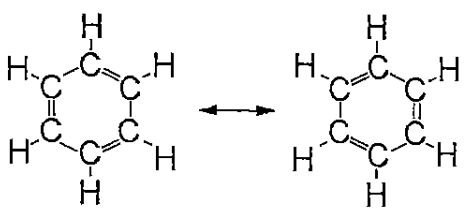
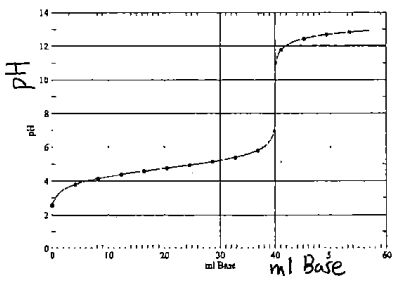 (A)4.7 (B)2.0 × 10⁻⁵ (C)2.6 (D)2.5 × 10⁻³ (E)None of the above
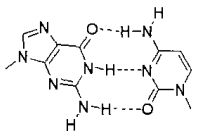 (B)
(B)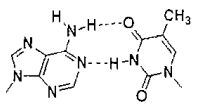 (C)
(C)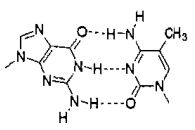 (D)
(D)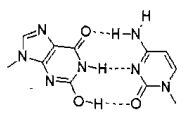 (E)
(E)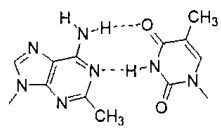
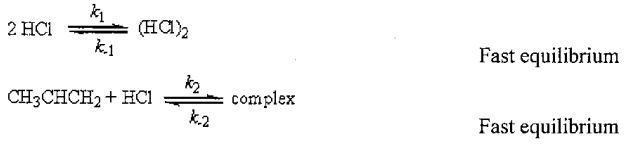
 CH3CHClCH3 + 2HCl Slow equilibrium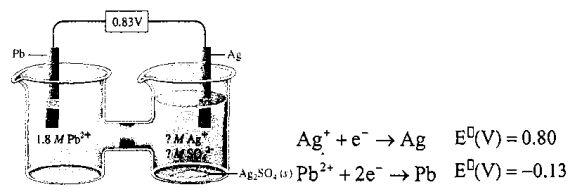
 = 8996 J/mol and
  = 11,718 J/mol, calculate the value of the equilibrium constant for this reaction.