所屬科目:研究所、轉學考(插大)◆無機化學
1. In a transition metal complex having Oh symmetry, which configurations in the followings can be classified as E? (A) t2g³ (B) t2g⁴eg² (C) t2g³ (D) t2g³eg³ (E) t2g⁶eg²
2. For a free ion with d² configuration determine the order of term energy levels: (A) ³P < ¹S < ¹D (B) ³P < ¹D < ¹S (C) ¹G < ³P < ¹D (D) ³P < ¹D < ³F (E) ³P < ¹F < ¹D
3. Which of the following salts has the highest lattice energy? (A) LiI (B) LiF (C) CsI (D) CsF
4. Both ZnS and CaF₂ have a face-centered cubic unit cell where the S²⁻ and Ca²⁺ ions are closest packed in each structure. Which of the following is true? (A) There are 4 tetrahedral holes empty in each structure. (B) In both compounds, one-half of the tetrahedral holes are filled. (C) In both compounds, all the tetrahedral holes are filled. (D) There are 8 Zn²⁺ ions and 4 F⁻ ions in the unit cell. (E) In ZnS, one-half of the tetrahedral holes are filled by Zn²⁺ ions, whereas in CaF₂ all the tetrahedral holes are filled with F⁻ ions.
5. If the radius of an atom is r, what is the length of the side of the body-centered cubic unit cell? (A) 4r/31/2 (B) 2.25r (C) r (D) 2r (E) 81/2r
6. Which of the followings is incorrect regarding applications of Tanabe-Sugano diagram? (A) Tanabe-Sugano diagrams can be used for both high-spin and low-spin complexes (B) Orgel diagrams apply only to high spin complexes (C) Based on Tanabe-Sugano diagram, the ground state of [Mn(H₂O)₆]²⁺(aq) is ⁶A₁ (D) The D₀ and B of a complex can be obtained by the absorption maxima from the spectra (E) According to Tanabe-Sugano diagram, [Cr(H₂O)₆]²⁺ generally shows two spin-allowed transitions.
7. Which of the followings is the consequence of selection rules in spectroscopy? (A) Complexes with d-d transition tend to show large extinction coefficient. (B) The optical transition observed in IrBr₆³⁻ is parity-forbidden. (C) Tetrahedral complexes have more intense absorption than octahedral complexes. (D) [Ti(H₂O)₆]³⁺ shows both spin- and Laporte-forbidden transitions.
8. Which of the following has the largest Δtet? (A) CrO₄²⁻ (B) MnO₄³⁻ (C) FeO₄²⁻ (D) RuO₄²⁻
9. What of the following complexes shows metal-to-ligand charge transfer (MLCT)? (A) [Fe(SCN)(H₂O)₅]²⁺ (B) [IrBr₆]³⁻ (C) [Cu(phen)₂]⁺ (D) [Cu(NH₃)₄]²⁺
10. Which of the following electron configurations does not show single spin-allowed t₂g → eg transitions? (A) d¹ (B) d³ (high-spin) (C) d⁴ (low-spin) (D) d⁶ (high-spin) (E) d⁹
11. Which of the following complexes do you expect to be colorless? (A) K₃[CrCl₆] (B) [Cd(NH₃)₄]Cl₂ (C) [Fe(H₂O)₆]SO₄ (D) Na₃[Co(CN)₆]
12. Which one of the following complexes has the lowest ligand exchange rate? (A) [Sr(H₂O)₆]²⁺ (B) [Mg(H₂O)₆]²⁺ (C) [Ca(H₂O)₆]²⁺ (D) [Na(H₂O)₆]⁺
13. Which of the following complexes do you expect to be kinetically inert? (A) [CoCl₄]²⁻ (B) [ZnCl₄]²⁻ (C) [CrCl₆]³⁻ (D) [TiCl₆]³⁻
14. The following complexes are formed upon reaction of [Ni(H₂O)₆]²⁺ with the corresponding ligand(s) in water. For which complex do you expect the greatest positive entropy change (ΔS) in the corresponding complex formation reaction? (A) [Ni(NH₃)₆]²⁺ (B) [Ni(en)(NH₃)₄]²⁺ (C) [Ni(en)₃]²⁺ (D) [Ni(en)₂(NH₃)₂]²⁺
15. Which of the following complexes do you expect to be kinetically inert? (A) [Co(H₃O)₄]²⁺ (B) [Zn(CN)₄]²⁻ (C) [Fe(CN)₆]⁴⁻ (D) [Ti(H₂O)₆]³⁺
16. Which of the following complexes do you expect to be brightly colored? (A) Cs₂(TiCl₆) (B) [Zn(pic)Cl₂ (C) [Mn(H₂O)₆]SO₄ (D) [Fe(H₂O)₄(SCN)₂]
17. Put in order of increasing rate of substitution by H₂O the complexes [Co(NH₃)₆]³⁺, [Rh(NH₃)₆]³⁺, [Ir(NH₃)₆]³⁺, [Mn(H₂O)₆]²⁺,[Ni(H₂O)₆]²⁺. (A) [Ir(NH₃)₆]³⁺ < [Rh(NH₃)₆]³⁺ < [Co(NH₃)₆]³⁺ < [Ni(OH₂)₆]²⁺ < [Mn(OH₂)₆]²⁺. (B) [Ir(NH₃)₆]³⁺ < [Rh(NH₃)₆]³⁺ < [Co(NH₃)₆]³⁺ < [Mn(OH₂)₆]²⁺ < [Ni(OH₂)₆]²⁺. (C) [Co(NH₃)₆]³⁺ < [Mn(OH₂)₆]²⁺ < [Ni(OH₂)₆]²⁺ < [Ir(NH₃)₆]³⁺ < [Rh(NH₃)₆]³⁺. (D) [Ni(OH₂)₆]²⁺ < [Mn(OH₂)₆]²⁺ < [Ir(NH₃)₆]³⁺ < [Rh(NH₃)₆]³⁺ < [Co(NH₃)₆]³⁺. (E) None of the above is correct
18. Which of the following complexes has the greatest thermodynamic stability (en = H₂N-CH₂CH₂-NH₂)? Note: assume a high-spin configuration for Mn in these complexes. (A) [Mn(NH₃)₆]²⁺ (B) [Zn(NH₃)₆]²⁺ (C) [Mn(en)₃]²⁺ (D) [Zn(en)₃]²⁺
19. Among the [M(H₂O)₆]ⁿ(aq) (M: 3d -transition metal ion) complexes, why is the [Mn(H₂O)₆]²⁺ shows the much weaker UV-Vis absorption than solution of other metal ions? (A) because other transition metal ions (B) because Mn²⁺ is high-spin d⁵ but other transition metal ions are low-spin (C) because the UV-Vis absorption of other transition metal ions are parity-allowed (D) because there are no excited states of the same spin multiplicity and no spin-allowed absorption (E) None of the above is correct
20. Which of the following configuration can NOT be classified as E in complexes having Oh symmetry? (A) t₂g⁵eg¹ (B) t₂g⁶eg³ (C) t₂g⁶eg² (D) t₂g⁶eg³ (E) none of the above is correct
21. Given the four complexes ( A ) [Co(H₂O)₆]³⁺, ( B ) [Co(NH₃)₆]³⁺, ( C ) [Co(NH₃)₆]²⁺ and ( D ) [Co(NH₃)₄]²⁺, which order of ligand field splitting (Δ) of Co-complexes is correct? (A) A > B> D > C (B) B > A > C> D (C) A > B > C > D (D) C > A > B > D (E) None of the above is correct.
22. Given the following complexes, predict which two are labile? A: (NH₄)₂Cr(=O)Cl₃ B: K₂MnI₆ C: K₃[Fe(CN)₆] D: [Fe(NH₃)₆]Cl₂ (A) A, C (B) B, C (C) A, D (D) B, D (E) None of the above is correct
23. Indicate that which of the following electron transfer reactions is inner-sphere type? (A) [Cr(H₂O)₆]²⁺ + [Co(NH₃)₅Cl]²⁺ → (B) [Cr(bipy)₃]²⁺ + [Co(NH₃)₅Cl]²⁺ → (C) [Ru(NH₃)₆]²⁺ + [Co(NH₃)₅OH]²⁺ → (D) [Ru(NH₃)₆]²⁺ + [Co(NH₃)₅(H₂O)]²⁺ → (E) None of the above is correct.
24. Which of the followings regarding d⁸ square-planar complex is incorrect? (A) The electron count of most stable d⁸ square-planar complexes is 16. (B) The MOs derived primarily from dxy and dz2 orbitals of the metal are slightly bonding and slightly antibonding, respectively. (C) Additional electrons will occupy the orbitals derived from the antibonding interaction of an M dx2-y2 orbital (D) The MOs derived primarily from dyz and dxz orbitals of the metal are non-bonding. (E) All of the above is correct.
25. Which of the following is INCORRECT regarding the M-N-O conformation in metal nitrosyl complexes? (A) The M-N-O angle can strongly deviate from 180° when back-bonding is less important. (B) Linear NO complex has a lower IR vibrational frequency in most cases. (C) The complex trans-[Co(en)₂(NO)Cl]² adopts a bent NO ligand geometry. (D) The [Fe(CN)₅(NO)]²⁻ adopts a linear NO ligand geometry.
26. The Nobel Prize in Chemistry 2010 was awarded to the topic "for palladium-catalyzed cross couplings in organic synthesis". Who are the recipients for this award: (A) Jacques Dubochet, Joachim Frank and Richard Henderson (B) Richard F. Heck, Ei-ichi Negishi and Akira Suzuki (C) William S. Knowles, Ryoji Noyori and K. Barry Sharpless (D) Yves Chauvin, Robert H. Grubbs and Richard R. Schrock (E) Jean-Pierre Sauvage, Sir J. Fraser Stoddart and Bernard L. Feringa
27. A newly prepared iron species (Angew. Chem. Int. Ed. 2017, 56, 7995-7999) was structurally characterized shown on the right. What is the electron count for this complex with Fe having four aryl groups bonded to it and a nitrogen-containing ligand? (A) 14 (B) 15 (C) 16 (D) 17 (E) 18.
28. Following Q 27, what would be the possible spin states for this complex? (A) 0 and 1; (B) 0 and 1/2; (C) 1 and 2; (D) 1/2 and 3/2; (E) 3/2 and 2.
29. The molecular geometry of I(CF₃)Cl₂ is? (A) Trigonal (B) Square pyramidal (C) Trigonal bipyramidal (D) tetrahedral (E) octahedral
30. Following Q 29, the Cl-I-Cl bond angle in I(CF₃)Cl₂ would be close to (A) 60° (B) 90° (C) 109° (D) 120° (E) 180°
31. Consider SF₆ molecule, what is the bond order for each S-F bond if only 3s and 3p valence shell of S are considered in forming bonds with F? (A) 1/3 (B) 2/3 (C) 1/2 (D) 1 (E) 3/2
32. What is the point group for 1,3,5,7-cyclooctatetraene (COT)? (A) C₂ₕ (B) S₄ (C) D₄ₕ (D) D₂d (E) C₂ᵥ
33. Match list I (compounds) with list II (structures), and select the correct answer using the codes given below.(A) (a-iii) (b-i) (c-ii) (B) (a-ii) (b-iii) (c-i) (C) (a-ii) (b-i) (c-iii) (D) (a-i) (b-ii) (c-iii) (E) (a-i) (b-iii) (c-ii)
34. In metalloenzymes, the metal centres are covalently linked through the side chains of the amino acid residues. The correct set of amino acids which are involved in the primary coordinates spheres of metalloenzymes is (A) Ala, Leu, His (B) Glu, His, Cys (C) Leu, Glu, Cys (D) Ala, His, Glu (E) Val, Phe, Asn
35. For the formation of an iron alkene complex shown below, what is the role of [CPh₃]BF₄?(A) Hydride scavenger (B) Brønsted base (C) Catalyst (D) Brønsted acid (E) Hydrogen scavenger
36. Which of the following reaction does NOT go forward? (A) MgCO₃ + HgI₂ → MgI₂ + Hg₂CO₃ (B) ZnO + 2LiC₄H₉ → Zn(C₄H₉)₂ + Li₂O (C) NaCN + AgF → NaF + AgCN (D) 2HI + FeBr₂ → 2HBr + FeI₂ (E) Fe + 2CF₃SO₃H → H₂ + Fe(CF₃SO₃)₂
37. The Walsh diagram (on the right) shows the correlation of the molecular orbital diagram of AH₂ system (A = 2ⁿᵈ period elements) in conversion between linear and bent geometries. Predict which of the molecules or ions, BeH₂, CH₂, FH⁻, FH⁻, are linear? (A) BeH₂, CH₂, FH⁻ (B) NH₂⁻, FH⁻ (C) BeH₂, FH⁻ (D) None of them are linear (E) All of them are linear
38. Following Q37, triplet carbene (CH₂) has two unpaired electrons and it can adopt either a bent or linear geometry, which would you predict is more stable? (A) Bent (B) Linear (C) Both have the same stability
39. Which amine would you expect to form the least stable adducts with BMe₃? (A) NEt₃ (B) NH₂Me₂ (C) NHMe₂ (D) NH₃ (E) Quinuclidine (on the right)
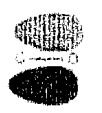
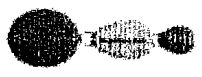
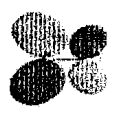
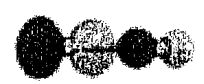
40. What does the HOMO of CO look like? (A) (B) (C) (D) (E)
41. Of the vibrational normal modes of CO₂ shown on right, which are infrared active? (A) I and II only (B) I and II only (C) II and III only (D) I, II, and III (E) None
42. Which of the following is nido? (A) C₂B₃H₅(CoCp)₂ (B) B₄H₆(CoCp)₂ (C) C₂B₈H₁₀4- (D) SB₈H₁₁ (E) CPB₁₀H₁₁
43. Which of the following mechanism for the illustrated reaction is consistent with these observations?●The reaction is first order in [Cp(CO)₂Re(CH₂CD₂CD₂CH₂)]● The reaction is zero order in PPh₃●CO dissociation does NOT occur during the reaction (A) (B) (C) (D)(E)
44. Which complex would be expected to have the highest C-O stretching frequency? (A) Fe(PMes)₃(¹³CO)₄ (B) Fe(PMes)₃(CO)₄ (C) Fe(PF₃)₃(¹³CO)₄ (D) Fe(PF₃)₃(CO)₄ (E) Fe(CO)₅
45. Which is the strongest acid in dilute aqueous solutions? (A) HNO₃ (B) HCl (C) HBr (D) HClO₄ (E) All have the same acidity in aqueous solution.
46. The wavefunction of one of the 3d orbitals for the hydrogen atom is sin²θsin2φ where Rnl(r) is the radial function and Ylᵐl(θ,φ) is the angular function. How many radial nodes and angular nodes are there in this orbital? (A) 0 and 1 (B) 0 and 2 (C) 1 and 1 (D) 1 and 2 (E) 2 and 2
47. What is the Mo-Mo bond order for [Mo₂(SO₄)₄]³⁻? (A) 2.5 (B) 3 (C) 3.5 (D) 4 (E) 5
48. Amongst the following which is not isolobal pairs (A) Mn(CO)₅ and CH₃ (B) Fe(CO)₄ and O (C) Co(CO)₃ and R₂Si (D) Mn(CO)₅ and RS
49. 12-Crown-4 binds with the alkali metal ions in the following order: Li⁺>> Na⁺> K⁺> Cs⁺. It is due to the (A) Right size of cation (B) Conformational flexibility of crown ether (C) Hydrophobicity of crown ether (D) Change in entropy being positive
50. The reaction between SbF₄ and two equivalents of HF leads to the formation of (A) SbF₃ + H₂ + 2F₂ (B) [SbF₆]⁻[H₂F]⁺ (C) HSbF₂ + 3F₂ (D) H₂SbF₃⁺ 2F₂ (E) [SbF₄]⁺[HF₂]⁻
 阿摩線上測驗
登入
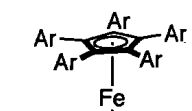
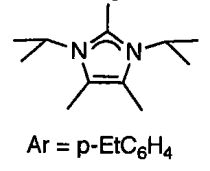 (A) 14 (B) 15 (C) 16 (D) 17 (E) 18.
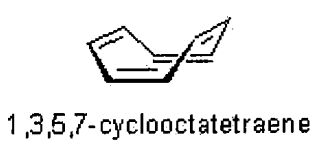 (A) C₂ₕ (B) S₄ (C) D₄ₕ (D) D₂d (E) C₂ᵥ
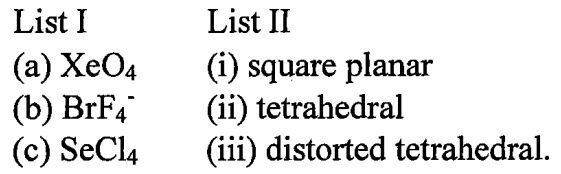 (A) (a-iii) (b-i) (c-ii) (B) (a-ii) (b-iii) (c-i) (C) (a-ii) (b-i) (c-iii) (D) (a-i) (b-ii) (c-iii) (E) (a-i) (b-iii) (c-ii)
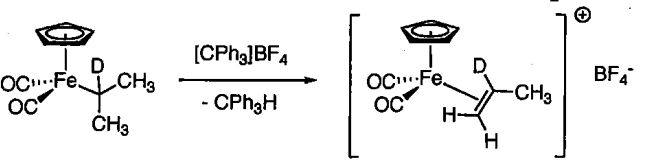 (A) Hydride scavenger (B) Brønsted base (C) Catalyst (D) Brønsted acid (E) Hydrogen scavenger
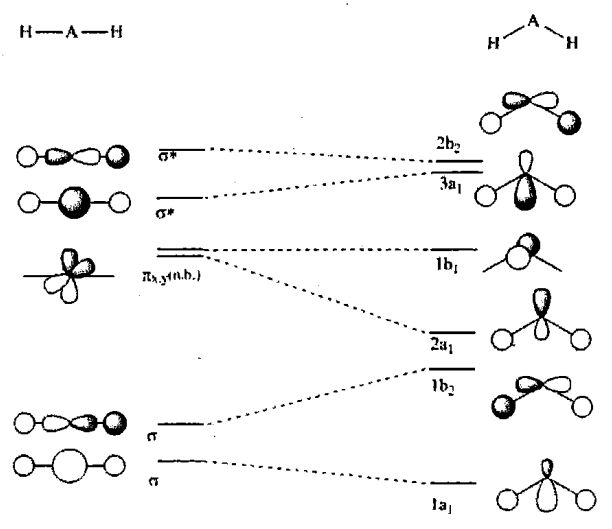 (A) BeH₂, CH₂, FH⁻ (B) NH₂⁻, FH⁻ (C) BeH₂, FH⁻ (D) None of them are linear (E) All of them are linear
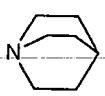 (A) NEt₃ (B) NH₂Me₂ (C) NHMe₂ (D) NH₃ (E) Quinuclidine (on the right)
 (B)
 (C)
 (D)
 (E)
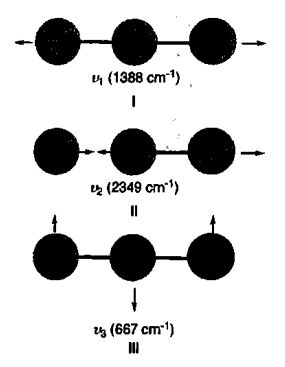 (A) I and II only (B) I and II only (C) II and III only (D) I, II, and III (E) None
 (A)
 (B)
 (C)
 (D)
 (E)

 sin²θsin2φ where Rnl(r) is the radial function and Ylᵐl(θ,φ) is the angular function. How many radial nodes and angular nodes are there in this orbital? (A) 0 and 1 (B) 0 and 2 (C) 1 and 1 (D) 1 and 2 (E) 2 and 2