所屬科目:研究所、轉學考(插大)-物化分析
2. The shaded area accounts for approximately what percentage of the total area under the curve? (3%) (A) 5.5% (B) 10.7% (C) 13.5% (D)25.4% (E) 68.2%
4.Which of the following statements about UV-Vis spectrometry is correct? (3%) (A) Absorbance (A)is defined a A = , where Po and P represent the power of the light beam that has passed through the solvent and the analyte-containing solution, respectively. (B) Absorbance(A) is the reciprocal of transmittance (T); in other words, A = 1/T. (C)The molar extinction coefficient in Beer's law in SI units is m2/mol. (D)The molar extinction coefficient is characteristic of a molecular species and independent of the solvent. (E)Beer's law accurately describes the absorption behavior of all solutions regardless of their analyte concentration.
6.Which of the following description about atomic X-ray spectrometry is NOT correct? (4%) (A)X-rays are electromagnetic radiation with very short wavelengths (≤ 10 nm). (B) X-ray line spectra involves electronic transitions of the innermost atomic orbitals. (C) The K series refers to X-radiation as a result of electrons moving from outer orbitals of an atom into a vacant orbital of the K shell. (D)The Ka line is the result of a vacant K orbital filled by an electron falling from the M shell. (E)The wavelength (energy) of the Ka lines for molybdenum is independent of its oxid ation state.
8. All of the following are spontaneous reactions that proceed to the right. Standard reduction potentials at 259C are provided for some half-cell reactions. Based on this information, rank the relative strengths of H+, Ag+ , Cd2+, Cu2+, and Zn2+ as electron acceptors (oxidizing agents) at 25℃. (4%) (A) Cu2+ > H+>Ag+ > Cd2+>Zn2+ (B) Ag+> Cu2+>H+> Cd2+>Zn2+ (C) Zn2+> Cd+>Ag+> Cu2+>H+ (D)Zn2+> Cd+> H+>Ag+ > Cu2+(E) There is not enough information to deduce their relative oxidative strengths.
9.Graphs shown below are data obtained by the following analytical methods (from left to right): IR, NMR, EPR, and MS. What are the correct x-axis labels and units? (4%) (A) Micrometer (um) - magnetic field (MHz) - magnetic field (G) - atomic mass unit (Da) (B) Wavenumber (1/cm) - magnetic field (MHz) - magnetic field (G) - atomic mass unit to charge ratio (Da/z) (C)Wavenumber (1/cm)- chemical shift (ppm) - magnetic field (G) - atomic mass unit to charge ratio (Da/z) (D)Micrometer (μm) - chemical shift (ppm)- Coulomb (C) - atomic mass unit (Da) (E)Wavenumber (1/cm) -chemical shift (ppm)- resistance (Ω) - atomic mass unit (Da)
10. Which of the following description is correct? (4%) (A) The solubility product constant (Ksp) of aluminum hydroxide (Al(OH)3) is 3 ×10-34; the Ksp of cadmium sulfide (CdS) is 1× 10-27. Based on this information, we know that Al(OH)3 is less soluble than CdS in pure water. (B) A glass of aqueous solution (100 mL) contains [Ca2+] = 2.13✖10-4 M, [F-] = 4.26✖ 10 -4 M, and 0. 781 g of insoluble Caf2 solid. Based on this information, we can estimate the Ksp of Caf2 to be ~3.9 x 10⁻¹¹ (C) Even through the same chemical can sometimes exist in more than one crystalline form, e.g., CaCO3 can be both calcite and aragonite, they are always equally soluble. (D) The pKa1and pKa2 of methionine are 2.28 and 9.21. Based on this information, we know that methionine has the best buffering power (capacity) at pH 5.75 (the mid-point between the two pKa values). (E) The hydrogen cation concentration ([H+]) of a pH 6.5 solution is 5.0 ✖10-7 M.
(a) (8 pts) Integrate the first and the second laws Tds = dU + PdV - μdn, together with the above conditions (a)(b)(c), to obtain the entropy formula S(U, V,n), which is a function of U,V and n (and T, P, μ are all eliminated).
(b) (4 pts) Suppose that a slightly different gas system satisfies (a') U= nCTδ but not (a), where the constant δ ≠1. Show that the conditions (a')(b)(C) imply that the entropy change dS is not an exact differential.
(c) (2 pts) Suppose that at t = O the proton is at the state Calculate the normalization constant N.
(d) (6 pts) T'he tine evolution of the spin state (t) obeys the time-dependent Schrodinger equation Together with the initial condition (t = 0) given above, solve (t).
(e)6 pts) Calculate the vectorrepresents the expectation value of the operatorat the time t. Plot the three components of this vector as functions of time.
 阿摩線上測驗
登入
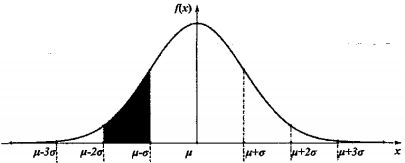 (A) 5.5% (B) 10.7% (C) 13.5% (D)25.4% (E) 68.2%
 , where Po and P represent the power of the light beam that has passed through the solvent and the analyte-containing solution, respectively. (B) Absorbance(A) is the reciprocal of transmittance (T); in other words, A = 1/T. (C)The molar extinction coefficient in Beer's law in SI units is m2/mol. (D)The molar extinction coefficient is characteristic of a molecular species and independent of the solvent. (E)Beer's law accurately describes the absorption behavior of all solutions regardless of their analyte concentration.
 (A) Cu2+ > H+>Ag+ > Cd2+>Zn2+ (B) Ag+> Cu2+>H+> Cd2+>Zn2+ (C) Zn2+> Cd+>Ag+> Cu2+>H+ (D)Zn2+> Cd+> H+>Ag+ > Cu2+(E) There is not enough information to deduce their relative oxidative strengths.
 (A) Micrometer (um) - magnetic field (MHz) - magnetic field (G) - atomic mass unit (Da) (B) Wavenumber (1/cm) - magnetic field (MHz) - magnetic field (G) - atomic mass unit to charge ratio (Da/z) (C)Wavenumber (1/cm)- chemical shift (ppm) - magnetic field (G) - atomic mass unit to charge ratio (Da/z) (D)Micrometer (μm) - chemical shift (ppm)- Coulomb (C) - atomic mass unit (Da) (E)Wavenumber (1/cm) -chemical shift (ppm)- resistance (Ω) - atomic mass unit (Da)
 Calculate the normalization constant N.
 (t) obeys the time-dependent Schrodinger equation
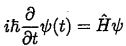 Together with the initial condition

 represents the expectation value of the operator
 at the time t. Plot the three components of this vector as functions of time.