所屬科目:研究所、轉學考(插大)◆有機化學及無機化學
2.Predict and arrange the reactivity of the following compounds in ascending order when reacting with HBr. (A)2<3<5<1<4 (B)5<3<2<4<1 (C)1<2<5<3<4 (D)4<1<3<5<2 (E)2<5<3<1<4
3. Which of the following structures, if flat, can be considered aromatic? (A) 1 only. (B) 3 and 5 only. (C) 2 and 4 only. (D) 1 and 3 only. (E) None of the above.
4. Which of the following is a correct Diels-Alder reaction product of the following reaction? (A)(B)(C)(D)(E)
5. Which of the following reaction will NOT give the product as shown? (A)(B)(C)(D)(E)
7. Which of the following position is the most reactive towards electrophilic aromatic substitution? (A)A(B)B(C)C(D)D(E)E
8. Describe the number of signals and their splitting in the 1H NMR of the following compound: (A) 7 signals: 1 singlet, 2 doublets, 1 triplet, 3 quartet (B) 6 signals: 1 singlet, 3 doublets, 1 triplet, 1 quartet (C) 7 signals: 4 doublets, 2 triplet, 1 quartet (D) 7 signals: 1 singlet, 4 doublets, 1 triplet, 1 quartet (E) 8 signals: 2 singlet, 4 doublets, 1 triplet, 1 quartet
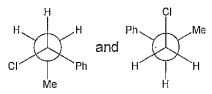
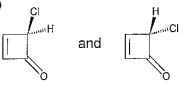
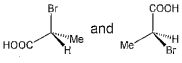
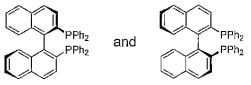
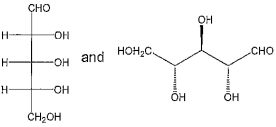
9.Which of the following pair of structures represent an identical compound? (A)(B)(C)(D)(E)
11. Which of the following compound is the most reactive in an SN1 reaction? (A)(B)(C)(D)(E)
12. Which of the following reaction conditions will give the desire product as shown? Reaction conditions: (1)O3 (2) (3) Excess HBr, then excess KOH (4) BuLi, then H2O (A) (1) and (2) only (B) (2) and (3) only (C) (2), (3) and (4) only (D) All of the above (E) None of the above
13. Which of the following amine CANNOT be synthesized by reductive amination? (A)(B)(C)(D)(E)
14. Which of the following acetal will react the fastest in acid-catalyzed hydrolysis? (A)(B)(C)(D)(E)
15. Which of the following compounds is the oxidant in the reaction below? (A)(B)(C)KOH(D)oxygen in air(E)
16. Rank the reactivity of the following compounds towards nucleophilic substitution of carboxylic acid derivative in increasing order (least to most). (A)2<3<5<1<4 (B)5<3<2<4<1 (C)1<2<5<3<4 (D)1<2<3<5<4 (E)2<5<3<1<4
17.Which of the following compound is most likely to be the major product of the following reaction? (A)(B)(C)(D)(E)
18. Which of the following solvent is a protic solvent? (A)(B)(C)(D)(E)
20. Which of the following statements is correct? (A) A chiral compound will always react to give a chiral product. (B) The most stable conformation of tert-butylcyclohexane is with the tert-butyI group at the axial position. (C) Aryl amines can be synthesized by reduction of nitroarenes. (D) The Diels-Alder reaction involves rearrangement of electrons between the two HOMOs of the two reactants. (E) A hard nucleophile will prefer to react with an α.β-unsaturated carbonyl compound in 1,4- addition instead of 1,2-addition.
21. Which of the following has the smallest radius? (A)(B)(C)(D)(E) all of the above
23. Which of the following is an organometallic compound? (A)(B) NaCl (C) PH3 (D)Ti(NMe2)4(E) Pd(OAc)2
25. The E/Ru value for an electron at n = 1 in a He+ cation, where E = energy, = Rydberg constant =13.61 eV, n = principal quantum number, is (A)-1 (B)-2 (C)-3 (D)-4 (E) none of the above
29. Among the following compounds, whose point group is ? (A) BF3 (B) CF4 (C) NF3(D) SF4 (E) none of the above
32. In aqueous solutions, which of the following is the strongest acid? (A) HNO3 (B) H2SO4 (C) HCIO4 (D) HCI (E) all of the above
34. Which of the following is the softest Lewis base? (A) (B)(C) H2O (D)(E)
36. The chirality Iabel for the dichlorobis(ethylenediamine)cobalt(IIl) cation shown below is (A) △-cis- (B) △-trans- (C) △-cis- (D) △-trans- (E) none of the above
37. As a ligand, CO is a (A) σ donor and π donor (B) σ donor and πacceptor (C) σ acceptor and π donor (D) σ acceptor and π acceptor (E) none of the above
38.Which of the following does not show a Jahn-Teller effect? (A)(B)(C) (D)(E) none of the above
39. The highest occupied molecular orbital(s) of is/are (A)(B)(C) (D)(E) none of the above
40. Which of the following has a d-d transition? (A) TiO2 (B) VO2 (C) CrO3 (D)(E) none of the above
41. The metal-metal bond order of Mo2(η5-C5H5)2(CO)4 is (A)0 (B) 1 (C) 2 (D) 3 (E) none of the above
42. Which of the following is the strongest trans influence ligand? (A)(B)(C) NH3 (D)(E) CO
43. In (CO)2, x= (A) 2 (B) 3 (C) 4 (D) 5 (E) none of the above
(1)
(2)
(3)
(4)
(5)
2. Draw products F and G, where F is an organometallic complex.
 阿摩線上測驗
登入
阿摩線上測驗
登入
 (A) (2R,5R)-5-chloro-2-methylcycloheptan-1-one (B) (2S,5R)-5-chloro-2-methylcycloheptan-1-one (C) (2R,5R)-5-chloro-2-methylcyclohexan-1-one (D) (1R,5R)-1-chloro-5-methylcycloheptan-3-one (E) (1R,4R)-4-chloro-1-methylcycloheptan-7-one
 (A)2<3<5<1<4 (B)5<3<2<4<1 (C)1<2<5<3<4 (D)4<1<3<5<2 (E)2<5<3<1<4
 (A) 1 only. (B) 3 and 5 only. (C) 2 and 4 only. (D) 1 and 3 only. (E) None of the above.
 (A)
 (B)
 (C)
 (D)
 (E)

 (B)
 (C)
 (D)
 (E)

 (A)A(B)B(C)C(D)D(E)E
 (A) 7 signals: 1 singlet, 2 doublets, 1 triplet, 3 quartet (B) 6 signals: 1 singlet, 3 doublets, 1 triplet, 1 quartet (C) 7 signals: 4 doublets, 2 triplet, 1 quartet (D) 7 signals: 1 singlet, 4 doublets, 1 triplet, 1 quartet (E) 8 signals: 2 singlet, 4 doublets, 1 triplet, 1 quartet
 (B)
 (C)
 (D)
 (E)
 (B)
 (C)
 (D)
 (E)


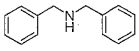 (B)
 (C)
 (D)
 (E)
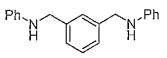
 (B)
 (C)
 (D)
 (E)

 (B)
 (C)KOH(D)oxygen in air(E)

 (A)2<3<5<1<4 (B)5<3<2<4<1 (C)1<2<5<3<4 (D)1<2<3<5<4 (E)2<5<3<1<4
 (A)
 (B)
 (C)
 (D)
 (E)

 (B)
 (C)
 (D)
 (E)

 (B)
 (C)
 (D)
 (E) all of the above
 (B) NaCl (C) PH3 (D)Ti(NMe2)4(E) Pd(OAc)2
 = Rydberg constant =13.61 eV, n = principal quantum number, is (A)-1 (B)-2 (C)-3 (D)-4 (E) none of the above
 ? (A) BF3 (B) CF4 (C) NF3(D) SF4 (E) none of the above
 (B)
 (C) H2O (D)
 (E)

 (A) △-cis- (B) △-trans- (C) △-cis- (D) △-trans- (E) none of the above
 (B)
 (C)
 (D)
 (E) none of the above
 is/are (A)
 (B)
 (C)
 (D)
 (E) none of the above
 (E) none of the above
 (B)
 (C) NH3 (D)
 (E) CO
 (CO)2, x= (A) 2 (B) 3 (C) 4 (D) 5 (E) none of the above


