所屬科目:關務英文
1. “Substantial transformation” for the determination of the origin of general imported goods refers to circumstances where the _____ -digit Customs Import Tariff heading of the goods produced after processing or manufacturing differs from that of the raw materials. Alternatively, even if such processing or manufacturing does not result in a change in the aforementioned tariff heading, it is recognized if an essential manufacturing process has been completed or the value-added rate exceeds _____ %. (A) 6;25 (B) 6;35 (C) 8;45 (D) 8;55
2. Since you did not meet the minimum order quantity, we will _____ USD500 for shipment value. (A) overcharge (B) undercharge (C) surcharge (D) undervalue
3. Regarding the Incoterms 2020 trade terms, which of the following statements is incorrect? (A) If the importer can negotiate a freight rate higher than the market level, it is advisable to import goods under FOB or FCA terms. (B) If the importer cannot handle the export customs clearance procedures themselves or send someone to do so, it is not advisable to purchase goods under EXW terms. (C) FAS and FOB terms are only applicable to sea or inland waterway transport. (D) DPU terms are applicable to sea, air, land, or multimodal transportation.
4. On February 28, 2026, a war broke out in Iran, and the Strait of Hormuz was partially blockaded, severely impacting global oil supplies. Which of the following items will NOT increase in price as a result? (A) War Risk Surcharge (B) Bunker Adjustment Fee (C) Freight Rate (D) Trade Promotion Service Fee
5. Regarding the “C” in the CPT terms and the “C” in the CFR terms as explained in Incoterms 2020, what is the difference between the two? (A) The former refers to “carriage”; the latter refers to “cost”. (B) The former refers to “cost”; the latter refers to “carriage”. (C) The former refers to “carrier”; the latter refers to “carriage”. (D) The former refers to “carriage”; the latter refers to “carrier”.
6. If the bill of lading indicates “on board” but does not specify the loading date, only the date of issuance, according to UCP 600, what date should be considered as the loading date? (A) Date of bill of lading issuance (B) Actual loading date of the goods (C) One day before the date of bill of lading issuance (D) One day after the date of bill of lading issuance
7. When the goods arrive before the shipping documents sent through the bank, if the importer wants to collect the goods in a timely manner, which of the following is NOT a workaround for the situation of “goods arriving before documents”? (A) Guarantee for collection (B) Telegraphic release (C) Endorsement of a duplicate bill of lading (D) Collection at the ship’s side
8. If the carrier issues a “clean bill of lading,” under which of the following circumstances can the consignee file a claim against the carrier? (A) The goods are damaged during transportation due to natural disasters. (B) The goods were already damaged at the time of loading, but the bill of lading indicates they are clean. (C) The consignee failed to collect the goods within the agreed timeframe. (D) The damage to the goods is due to inherent defects in the packaging.
9. In cargo transport insurance, I.O.P. (Irrespective of Percentage) means: (A) Insurance claims are paid in full by the insurer regardless of the percentage of loss. (B) Compensation is only provided for damages exceeding 20%. (C) Only applicable to specific types of goods. (D) Damages below 10% are not compensated.
10. According to The Reciprocal Trade Agreement signed between Taiwan and USA on Feb 2026, which of the following is「TECRO」? (A)Taiwan Economic and Climate Representative Office (B)Taipei Economic and Cultural Representative Office (C)Taiwan Economic and Cultural Representative Office (D)Taipei Economic and Customs Representative Office
11. Which of the following statements about Institute Cargo Clauses , Institute Cargo Clauses , and Institute Cargo Clauses is incorrect? (A) has the broadest coverage. (B) has the lowest insurance premium. (C), , and do not cover war risks and strike risks. (D) and present all coverage items in a comprehensive manner.
12. Which of the following correctly describes the risk coverage of export insurance? (A) The risk of the exporter being unable to collect payment. (B) The risk of export goods being damaged during transportation. (C) The risk of changes in the political situation of the exporting country. (D) The risk of the exporter being unable to deliver due to operational difficulties.
13. An Import Permit (I/P) is valid for six months. The expiration date of this six-month period is defined as the “date of shipment.” As long as the goods are loaded and shipped from the exporting country before the permit’s expiration date (including the expiration date itself), the permit remains valid. Which of the following dates is considered the “date of shipment”? (A) The date of issue stated on the invoice at the port of shipment (B) The date of issue stated on the bill of lading at the port of shipment (C) The date of export release (D) The date of export declaration
14. The buyer and seller agree to make payment via Documents Against Acceptance (D/A). When should the importer make the payment for the goods? (A) When the collecting bank presents the documentary bill of exchange to the importer (B) When the importer accepts the bill of exchange (C) When the importer presents the documents to the carrier to collect the goods (D) When the collecting bank presents the matured bill of exchange accepted by the importer
15. Regarding General Average, which of the following statements is correct? (A) Only the shipping company is required to share the loss. (B) Only the cargo owners are required to share the loss. (C) The vessel, cargo, and freight beneficiaries share the loss proportionally. (D) The insurance company bears the full loss.
16. In international trade dispute resolution, which of the following statements regarding mediation and arbitration is incorrect? (A) Mediation is conducted by a third party who assists both parties in reaching an agreement, and it is usually non-binding. (B) Arbitration occurs when both parties agree to have an arbitration institution or arbitrator make a decision, and the award is legally binding. (C) In arbitration proceedings, the parties cannot choose the arbitrator or arbitration institution, and the court must appoint them. (D) Mediation can help both parties resolve disputes quickly and save litigation costs.
17. What does the MW0 code signify under the import and export goods regulations? (A) Goods from mainland China are prohibited from importation. (B) Import and export are subject to control. (C) Goods from mainland China are permitted for import and export under certain conditions. (D) Import and export licenses are issued by the International Trade Administration.
18. Imported advertising materials and samples with a dutiable value (CIF) not exceeding NT$_____ are exempt from import duties. (A) 6,000 (B) 10,000 (C) 12,000 (D) 15,000
19. Which section of the US Trade Act of 1974 authorizes the President to take all appropriate action to obtain the removal of any act of a foreign government that violates an international trade agreement that restricts US commerce? (A)Section 122 (B)Section 121 (C)Section 302 (D)Section 301
20. The duty-payer shall declare imported good to Customs within A days following the arrival date of goods, in the case the duty-payer fails to apply for clearance within the time period, a late fee of B per day shall be levied beginning from the date following the time period expires. Which of the following one is correct? (A)A is 10 days and B is NT$150 (B)A is 15 days and B is NT$200 (C)A is 10 days and B is NT$200 (D)A is 15 days and B is NT$150
21. Which of the following Incoterms mean “the seller bears all risks involved in bringing the goods to and unloading them at the named place of destination”? (A)Delivered Duty Paid (B)Delivered at Place Unloaded (C)Delivered at Place (D)Cost Insurance and Freight
22. Which of the following Incoterms mean “the seller delivers the goods and transfers the risk to the buyer by handing them over to the carrier”? (A)Cost and Freight (B)Delivered Duty Paid (C)Cost Insurance and Freight (D)Carriage and Insurance Paid To
23. A reference to an Incoterms 2020 rule in a sales contract clearly outlines the obligations of both parties concerning several key topics, such as: (A)Risks, profits, transportation and customs clearance (B)Risks, cost, transportation and security clearance (C)Risks, cost, transportation and customs clearance (D)Risks, carbon neutral, transportation and customs clearance
24. How many days should containers carrying maritime express consignments be dismantled and delivered to the warehouse after being stored in the temporary container storage area? (A)Two calendar days (B)Two working days (C)Three calendar days (D)Three working days
25. For imported goods subject to manual inspection, the number of cartons opened for examination shall, in principle, be limited to less than _____ % of the total. However, if _____ cartons have already been opened and no discrepancies are found, further inspection may be waived. (A) 5;10 (B) 10;20 (C) 15;30 (D) 20;40
26. There are several modes of import and export declarations used in Customs declarations. Which of the following is correct? (A)G1 for Import, G5 for Export and F5 is Import for Free Trade Zone (B)G1 for Export, G5 for Import and F5 is Export for Free Trade Zone (C)G1 for Export, G5 for Export and F5 is Import for Free Trade Zone (D)G1 for Import, G5 for Export and F5 is Export for Free Trade Zone
27. Which government agency defines the types and formats of application forms for Certificates of Origin and Certificates of processing? (A)The International Trade Administration, Ministry of Economic Affairs (B)Customs Administration, Ministry of Finance (C)National Property Administration, Ministry of Finance (D)Intellectual Property Office, Ministry of Economic Affairs
28. According to the regulations regarding Certificates of Origin, which of the following will be considered a substantial transformation? (A)Processing operations involving simple assembling (B)Procedures for concentration but do not change the original nature of the product (C)Preservation required for transportation (D)A raw material undergoes processing, resulting in an added value that exceeds 35%
29. What is the time basis for customs clearance operations at the logistics center? (A)a working-hour basis (B)a 24-hour basis (C)a working day basis (D)a 12-hour basis
30. What are the differences between a logistics center and a bonded warehouse? (A)Both the bonded warehouse and logistics center can simple processing the goods. (B)A logistics center can only perform reconditioning, while a bonded warehouse can simple processing the goods. (C)A bonded warehouse can only perform reconditioning, while a logistics center can simple processing the goods. (D)Both the bonded warehouse and logistics center cannot simple processing the goods.
31. Prior to the airplane or vessel’s arrival, how many hours should both air and sea forwarders submit the import cargo manifest to Customs? (A)For the air forwarder is 2 hours and for the sea forwarder is 6 hours (B)For the air forwarder is 2 hours and for the sea forwarder is 5 hours (C)For the air forwarder is 3 hours and for the sea forwarder is 6 hours (D)For the air forwarder is 3 hours and for the sea forwarder is 5 hours
32. What is the required guarantee deposit, a sea forwarder must submit for registration with Customs? (A)The deposit amount is TWD 600,000, but for those certified with security and Safety AEO, it drops to TWD 300,000. (B)The deposit amount is TWD 600,000, but for those certified with security and Safety AEO, it drops to TWD 400,000. (C)The deposit amount is TWD 500,000, but for those certified with security and Safety AEO, it drops to TWD 250,000. (D)The deposit amount is TWD 500,000, but for those certified with security and Safety AEO, it drops to TWD 300,000.
33. When declaring online, if the import cargoes carried are not included in the cargo manifest, the manifest may be corrected at Customs with a justifiable reason within which time period after the vessel or plane has arrived? (A)By shipping, within 120 hours, by air transport, within 72 hours (B)By shipping, within 72 hours, by air transport, also within 72 hours (C)By shipping, within 120 hours, by air transport, also within 36 hours (D)By shipping, within 72 hours, by air transport, also within 36 hours
34. The bonding operations of Science Parks( A ), Bonded Warehouse( B ) and Logistics Center( C ) were supervised by which government agency? (A)A: National Science and Technology Council, B: Ministry of Finance, C: Ministry of Finance (B)A: Ministry of Finance, B: Ministry of Finance, C: Ministry of Finance (C)A: National Science and Technology Council, B: Ministry of Finance, C: National Science and Technology Council (D)A: Ministry of Finance, B: National Science and Technology Council, C: Ministry of Finance
35. What preferential measures can Customs adopt for goods imported by a duty-payer with AEOS status? (A)Goods with a declared Customs Value less than NTD 10 million may be released without documentation examination. (B)Goods with a declared Customs Value more than NTD 10 million may be released without both documentation examination and physical inspection. (C)Goods with a declared Customs Value less than NTD 100 million may be released without documentation examination. (D)Goods with a declared Customs Value more than NTD 100 million may be released without both documentation examination and physical inspection.
36. Which government agency is responsible for the “Act for the Establishment and Management of Free Trade Zones” and the “Regulations Governing Customs Clearance for Goods in Free Trade Zones”? (A)The first is the Ministry of Foreign Affairs and the second is the Ministry of Finance. (B)The first is the Ministry of Economics and the second is the Ministry of Finance. (C)The first is the Ministry of Transportation and Communications and the second is the Ministry of Finance. (D)The first is the Ministry of Finance and the second is also the Ministry of Finance.
37. What is the term commonly used to refer to the International Convention on the simplification and harmonization of customs procedures, which was adopted by the Customs Co-operation Council in 1973? (A)Kyoto Convention (B)Tokyo Convention (C)Paris Convention (D)Brussel Convention
38. According to Article 18 of the Customs Act, when the concerned duty-payer provides a pre-entry declaration along with all required documentation, which imported air cargo may be examined and released alongside the aircraft by Customs with special consideration? (A)frozen foods, computer chips, live animals and hazardous goods (B)fresh foods, perishable goods, electronic equipment and auto parts (C)fresh foods, perishable goods, live animals and hazardous goods (D)Frozen food, computer chips, electronic equipment and hazardous goods
39. Import samples shall be retained for _____ from the date the sample receipt is issued. In contrast, export samples shall be retained for _____ from the date the sample receipt is issued. (A) 1 month;5 days (B) 2 months;10 days (C) 3 months;15 days (D) 6 months;30 days
40. According to the “ATA Carnet Regulations” established by our country, which of the following goods are NOT eligible for temporary admission? (A) Professional equipment and apparatus (B) Perishable goods (C) Goods for display or use at international trade exhibitions or conferences (D) Imported commercial samples for display or demonstration purposes to solicit business
(一)出口報單
(二)免驗通關
(三)預估發票
(四)離岸價格
(一) In 2025, Taiwan’s Customs Administration launched a five-year Digital Customs Transformation Program to boost trade competitiveness and security. This initiative focuses on four key pillars: reshaping the Customs-Port-Trade (CPT) Single Window for better collaboration, developing intelligent services through data analytics, adopting cloud computing for operational flexibility, and strengthening cybersecurity and off-site backups.
As a critical national infrastructure, the program aims to accelerate digital transformation, creating a resilient and smart customs environment that supports Taiwan’s long-term economic development and international trade efficiency.
(二)Following China’s new trade measures, Taiwan’s Ministry of Agriculture reaffirmed its strategy to diversify export markets and reduce reliance on an unpredictable Chinese market. Taiwan has successfully shifted focus to Japan, Singapore, and North America.
Notably, fruit and vegetable exports to China plummeted from 73% in 2019 to just 12.6% last year, with Japan now the top buyer of Taiwanese pineapples. While open to resuming trade, Taiwan remains cautious, prioritizing scientific management and improved cold-chain systems to ensure long-term quality and stability in global markets.
 阿摩線上測驗
登入
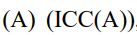 , Institute Cargo Clauses
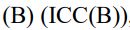 , and Institute Cargo Clauses
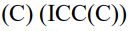 is incorrect? (A)
 has the broadest coverage. (B)
 has the lowest insurance premium. (C)
 ,
 , and
 do not cover war risks and strike risks. (D)
 and
 present all coverage items in a comprehensive manner.