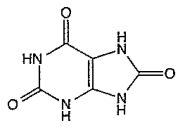
所屬科目:研究所、轉學考(插大)◆生物化學
1. Which of the following pairs of bonds can rotate within a peptide backbone and the torsion angle of the latter is assigned as psi angle? (A)(B)(C)(D)(E)
2. Which of the following statements is false ? (A) One protein has one conformation but has many configurations. (B) An α-helix can be destabilized by the presence of two Lys residues near the amino terminus of the α-helix. (C) Determining the precise spacing of atoms within a large protein is possible only through the use of x-ray diffraction. (D) Protein domains may retain their correct shape even when separated from the rest of the protein. (E) Proteins are classified within families or superfamilies based on similarities in structure and/or function.
3. RecA enzyme requires for catalysis. When the enzyme lacks , it would be referred to as the: (A) apoenzyme. (B) substrate. (C) coenzyme. (D) holoenzyme. (E) prosthetic group.
4. Catalytic antibodies, also called _____ are generated against an antigen that is: (A) zymogens; an analog of the product of the reaction. (B) abzymes; the substrate of the reaction. (C) abzymes; an analog of the transition-state intermediate in the reaction. (D) zymogens; an analog of the transition-state intermediate in the reaction. (E) holoenzyme; the substrate of the reaction.
5. In the catalytic triad common to many serine proteases, _ increases the basicity of _____ thus allowing deprotonation of _____ to serve as a nucleophile. (A) Ser, His, Asp. (B) Asp, His, Ser. (C) Ser, His, His. (D) His, Ser, Asp. (E) Cys, His, Ser.
6. Negative cooperativity of Rep helicase from E. coli means that: (A) once it binds ssDNA, binding dsDNA is prohibited. (B) when both subunits are bound to DNA, ATP hydrolysis promotes release of both subunits. (C) ATP hydrolysis promotes DNA binding of both subunits simultaneously. (D) when one subunit binds DNA, the other releases from the DNA. (E) when one subunit binds DNA, the other binds tightly to the DNA.
7. Each of the following vitamins is required for reactions in the oxidation of pyruvate to CO2 and H2O except ? (A) biotin. (B) pantothenate. (C) niacin. (D) thiamine. (E) riboflavin.
8. Which one of the following statements concerning biotin and gluconeogenesis is not true ? (A) Biotin is used to add CO2 to certain intermediates in gluconeogenesis. (B) CO2 is incorporated into the glucose product. (C) Biotin is capable of binding covalently to CO2. (D) Biotin helps synthesize an important precursor of phosphoenolpyruvate. (E) ATP hydrolysis is required to attach CO2 to biotin.
9. Which of the following statements is true ? (A) One of the reason why the enzyme catalyzes the synthesis of citrate is called citrate synthase is because the reaction requires ATP. (B) Pyruvate dehydrogenase, isocitrate dehydrogenase, and succinyl-CoA synthase catalyze reactions that release CO2. (C) Aconitase catalyzes reaction that transforms from an achiral to chiral molecule. (D) Reactions catalyzed by succinate dehydrogenase releases GTP. (E) Animals can use fat or acetate as the carbon source because they can replenish TCA cycle intermediates by anaplerotic reaction.
10. Which one is not a component of the plasma membrane? (A) Sphingolipid. (B) Phosphatidylcholine. (C) Triacylglycerol. (D) Sterol. (E) Glycolipids.
11. Which modification is not required for lipid anchor proteins? (A) Myristoyl. (B) Palmitoyl. (C) Prenyl. (D) Glycosyl phosphatidylinositol. (E) Phorphorylation.
12. Which one does not reduce the level of LDL? (A) Statin. (B) Arachidonic acid. (C) Lipitor. (D) Anti-PCSK9 antibody. (E) LDL receptor.
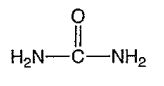
13. Urea and formamide are agents that denature dsDNA by: (A) intercalating between base pairs and disrupting van der Waals interactions. (B) forming ionic bonds with the backbone phosphates. (C) competing effectively with the H-bonding between the base pairs (D) changing the pH to cause hydrolysis. (E) None are true.
14. ATP made in glycolysis and the TCA cycle is the result of _____ phosphorylation, and NADH-dependent ATP synthesis is the result of _____ phosphorylation. (A) oxidative; substrate-level. (B) oxidative; electron. (C) substrate-level; electron. (D) substrate-level; oxidative. (E) proton-gradient; oxidative.
15. Phenylketonuria (PKU) results from a disorder of the metabolism of: (A) branched-chain amino acid. (B) glutamic acid. (C) phenylalanine. (D) cysteine. (E) dopa.
16. Adipokines are cytokines (cell signaling proteins) secreted by the adipose tissue. Which factor is not an adipokine: (A) Leptin. (B) Adiponectin. (C) TNFa. (D) Resistin. (E) Ghrelin.
17. Aminotransferases are enzymes that have all of the following characteristics except : (A) can make an α-keto acid from an α-amino acid. (B) use pyridoxal phosphate as a carrier of amino groups. (C) catalyze highly reversible reactions. (D) use ATP. (E) serum levels are used as a clinical measure of tissue damage.
18. Which amino acid is the precursor of the methyl group donor in biological methylation? (A) Tryptophan. (B) Histidine. (C) Methionine. (D) Arginine. (E) Lysine.
19. What situation is most likely to the formation of ketone bodies? (A) Starvation. (B) Diabetes not suitably controlled. (C) Intake high in lipids, low in carbohydrates. (D) All of the above. (E) None of the above.
20. What effect do ketone bodies have on blood pH? (A) Lower blood pH. (B) Increase blood pH. (C) Neutralize blood pH. (D) No effect on blood pH. (E) Can't determine.
21. Which statement is correct for fatty acid biosynthesis? (A) Double bonds can be introduced in Golgi body. (B) Chain lengthening occurs either in ribosome or endoplasmic reticulum. (C) The carbon source at site of endoplasmic reticulum is malonyl-ACP. (D) Ribosome is the principle enzyme for fatty acid biosynthesis. (E) Carbon dioxide is involved in the formation of malonyl-CoA.
22. Where does the fatty acid synthesis occur in the cell? (A) Autophagosome. (B) Cytoplasm. (C) Mitochondrial matrix. (D) Golgi body. (E) Inner mitochondrial membrane.
23. In analytical ultracentrifugation the sedimentation coefficient, which is expressed in Svedberg units (S), characterizes a sedimenting particle on the basis of: (A) size only. (B) shape only. (C) charge only. (D) both size and shape. (E) None of these.
24. Which of the following statements is true ? (A) In order to replicate both DNA strands, E. coli synthesizes each strand in the opposite direction (one 5'-3', one 3'-5'), so they can be synthesized at once. (B) Okazaki fragments are short DNA pieces that explain how DNA is synthesized on the leading strand. (C) A primer strand in DNA replication is needed because it ensures the fidelity of the newly synthesized DNA strand. (D) DNA repair mechanisms are essentially the same whether the DNA has minor damage or major damage.
25. The cyclic form of sugars (A) has one more chiral center than the open-chain form. (B) loses a chiral center compared to the open-chain form. (C) is not usually found in nature. (D) has one more carbon atom than the open-chain form. (E) has one less carbon atom than the open-chain form.
26. Mr. Bean synthesizes a pentapeptide "DPRTH". Choose the correct answer from the following descriptions (pK₂ of the N-terminal amino group of the peptide is 9.1; pK₁ of the C-terminal carboxyl group of the peptide is 2.1; pKa of D is 3.65, pKa of R is 12.5, pKa of H is 6): (A) The pI value of the peptide is around 4. (B) The pI value of the peptide is around 7. (C) The pI value of the peptide is around 11. (D) When 0.1 mg of the peptide is dissolved in 100 mM Tris (pH 9), it could bind to a cation exchange column. (E) All the residues in this peptide contain one chiral center only.
27. Which of the following statements about protein-ligand binding is correct ? (A) The (association constant) is equal to the concentration of ligand when all of the binding sites are occupied. (B) The is independent of such conditions as salt concentration and pH. (C) The larger the , the weaker the affinity. (D) The larger the , the smaller the (dissociation constant). (E) The larger the , the faster the binding.
28. Which of the following statements regarding enzyme regulation is true ? (A) Addition of an inhibitor to a V system results in kinetics similar to addition of a competitive inhibitor to a typical hyperbolic system. (B) Addition of an allosteric activator to a K system changes the plot of V vs. [S] from a sigmoidal curve to a more hyperbolic curve. (C) Allosteric effectors are always more powerful than covalent modification. (D) The T state of an enzyme generally has more activity than the R state. (E) None of the above are true.
29. In the enzyme catalyzed reaction sequence below, can the E-PO4- intermediate be predicted and why?
(A) yes, the mechanism is a double-displacement reaction. (B) yes, the reaction fits the ping-pong model. (C) no, the reaction is random single-displacement. (D) no, the reaction is double-displacement. (E) no, the reaction is order single-displacement.
30. An enzyme-catalyzed reaction rate will be increased if the energy level of ES can be increased. Which of the following will not increase the energy level of ES? (A) destabilization of ES by strain caused by non-covalent interactions between E and S. (B) loss of entropy due to binding of E and S. (C) destabilization of ES by distortion. (D) destabilization of ES by electrostatic effects. (E) destabilization of ES by solvation.
31. The T form (tense or taut form) of deoxyhemoglobin differs from oxyhemoglobin (the R form or relaxed form) by all except : (A) covalent linkages between subunits. (B) specific intrachain hydrogen bonds. (C) between β-subunit salt links (ion-pair bonds). (D) between a-subunits salt links (ion-pair bonds). (E) intrachain salt bridges.
32. The power stroke in muscle contraction is associated with: (A) the binding of ATP to ATPase. (B) the hydrolysis of ATP. (C) binding of myosin to actin. (D) addition of water for ATP hydrolysis. (E) the dissociation of ADP and Pi from the ATPase.
33. Which of the following four statements regarding glycolysis and gluconeogenesis is correct ? (1) Substrate-level phosphorylation occurs when conversion of1,3-bisphosphoglycerate to 3-phosphoglycerate occurs.
(2) The only oxidative reaction in glycolysis is the conversion of glyceraldehyde-3-phosphate to 1,3-bisphosphoglycerate.
(3) The phosphofructokinase-1 catalyzes the glycolytic reaction step that is irreversible in gluconeogenesis.
(4) If fructose-2,6-bisphosphate is low, glycolysis proceeds; if fructose-2,6-bisphosphate is high, gluconeogenesis proceeds. (A) (1), (2), and (4) are correct. (B) (1), (3), and (4) are correct. (C) (1), (2), and (3) are correct. (D) (2), (3), and (4) are correct. (E) All are correct.
34. Consider the reaction below, which of the following statement is false ? (A) When M is acetaldehyde, enzyme 1 is pyruvate decarboxylase. (B) When M is oxaloacetate, enzyme 1 is pyruvate carboxylase. (C) When M is phosphoenopyruvate, enzyme 2 is pyruvate kinase. (D) When M is malate, enzyme 2 is malic enzyme. (E) None of above is false.
35. Which of the following statements about the oxidative decarboxylation of pyruvate in aerobic conditions in animal cells is correct ? (A) The process occurs in the cytosolic compartment of the cell. (B) The methyl group is eliminated as CO2. (C) One of the products of the reactions of the pyruvate dehydrogenase complex is a thioester of acetate. (D) The pyruvate dehydrogenase complex uses all of the following as cofactors: , lipoic acid, pyridoxal phosphate (PLP), and FAD. (E) The reaction is so important to energy production that pyruvate dehydrogenase operates at full speed under all conditions.
36. 2,4-dinitrophenol and oligomycin inhibit mitochondrial oxidative phosphorylation. 2,4-dinitrophenol is an uncoupling agent; oligomycin blocks the ATP synthesis reaction itself. Therefore,2,4-dinitrophenol will: (A) allow electron transfer in the presence of oligomycin. (B) allow oxidative phosphorylation in the presence of oligomycin. (C) block electron transfer in the presence of oligomycin. (D) diminish O2 consumption in the presence of oligomycin. (E) do none of the above.
37. Which one directly regulates fatty acid breakdown? (A) Succinyl CoA. (B) Myristoyl CoA. (C) Acetyl CoA. (D) Malonyl CoA. (E) Fatty acid synthase.
38. Which one is not the limiting step in lipid metabolism? (A) Fatty acyl CoA + Carnitine → Fatty acyl carnitine (B) Palmitoyl CoA + Serine → Sphinganine (C) Acetyl CoA → Malonyl CoA (D) HMG COA → Mevalonate (E) Mevalonate → Cholesterol
39. If an ATP synthase contains 12 c subunits, 3 a subunits and 3 ẞ subunits, how many protons must pass through this complex for every ATP molecule synthesized and transported to the cytosol, assuming that each ATP synthesized requires one proton for transport to the cytosol. (A) 3. (B) 4. (C) 5. (D) 12. (E) 13.
40. It is crucial that regulation occur at pyruvate dehydrogenase because: (A) pyruvate kinase is reversible. (B) lactate dehydrogenase is the only other enzyme to use pyruvate. (C) the product acetyl-CoA is committed to oxidation in the citric acid cycle or fatty acid biosynthesis. (D) alanine aminotransferase would use the pyruvate. (E) All of the above.
41. An essential feature of the glyoxylate cycle, which is not associated with the TCA cycle is: (A) it utilizes condensation of acetyl-CoA with glyoxylate. (B) each complete cycle produces a net gain of two 4-carbon molecules. (C) it occurs in chloroplasts and the mitochondria of plant seeds. (D) mammals use the glyoxylate cycle for gluconeogenesis. (E) it is a reductive pathway that utilizes NADPH as an electron source.
42. Which of the coenzyme is not involved in the one-carbon metabolism: (A) Tetrahydrofolate. (B) S-adenosylmethione. (C) Vitamin B12 (cabalamin). (D) Pyridoxal phosphate. (E) None of the above.
43. Otto Warburg observed that, in conditions of normal oxygen tension, normal cells produced most of their energy via mitochondrial respiration. In contrast, over 50% of cancer cell energy was generated in the cytosol via glycolysis, with the remainder from the mitochondrial respiratory chain. This is termed the Warburg effect. The Warburg effect may be beneficial to cancer cells because it provides precursors for many biosynthetic pathways. These precursors include the followings, except : (A) amino acid precursors. (B) NADPH. (C) ribose sugars for DNA and RNA synthesis. (D) fatty acids for lipid synthesis.
44. Purinosome is a: (A) bacteria relying on the metabolism of purine for energy. (B) multi-enzyme complex that carries out de novo purine biosynthesis within the cell. (C) multi-enzyme complex degrading purine nucleotides within the cell. (D) membrane transporter for cells to uptake purine base from the cell medium. (E) nutrient formula promoting muscle growth.
45. In a number of species calorie restriction without malnutrition may slow the biological aging process, resulting in longer maintenance of youthful health and an increase in both median and maximum lifespan. Which of the followings is not involved in the underlying mechanism? (A) Reduced levels of insulin and IGF-1. (B) Increased gluconeogenesis. (C) Activation of AMPK. (D) Reduced production of reactive oxygen species. (E) Activation of Sirt-1.
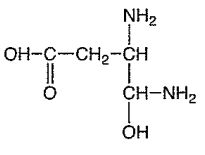
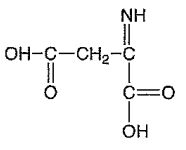
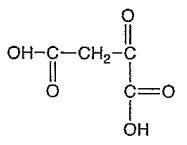
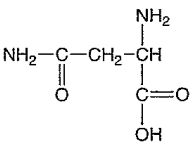
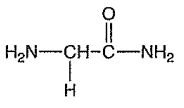
46. Predict the prodcut of the following trasamination reaction via the enzyme using pyridoxal phosphate as cofactor. (A)(B)(C)(D)(E)
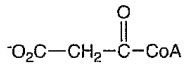
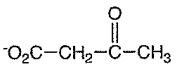
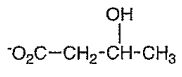
47. What is the essential ingredient for biosynthesis of fatty acid? (A)(B)(C)(D)(E)
48. Which of the following statements is true ? (A) Non-coding RNAs are known to promote RNA silencing. (B) Ribozymes are more efficient catalysts than protein-based enzymes. (C) 5' end of prokaryotic mRNA are protected from degradation. (D) The sequences in eukaryotic DNA known as introns are those included in the final sequence of messenger RNA. (E) The β-barrel structure motif in transcription factor CREB is responsible for protein-DNA interaction.
49. Which of the following is not true concerning silent mutations? (A) Silent mutations refer to base sequence differences that do not change the amino acid coded for. (B) Only changes in base sequence that lead to a different amino acid can have an effect on the organism. (C) Changes in the sequence of an exonic splicing enhancers can lead faulty removal of introns. (D) Silent mutations in a gene for pain tolerance have been correlated with human differences in perception of pain. (E) Translation kinetics and protein folding can be affected by silent mutations.
50. There is no codon for the amino acid hydroxyproline, but this amino acid is a prominent feature of collagen structure. Which of the following is a likely explanation? (A) Hydroxyproline is substituted for proline after translation by a cut and patch mechanism. (B) Proline is covalently modified to give hydroxyproline after translation. (C) There is an alternative mechanism for synthesis of proteins that contain hydroxyproline. (D) All of above are likely explanations. (E) It is not possible to form a hypothesis from the information given.
 阿摩線上測驗
登入
 (B)
 (C)
 (D)
 (E)

 for catalysis. When the enzyme lacks
 , it would be referred to as the: (A) apoenzyme. (B) substrate. (C) coenzyme. (D) holoenzyme. (E) prosthetic group.
 (association constant) is equal to the concentration of ligand when all of the binding sites are occupied. (B) The
 is independent of such conditions as salt concentration and pH. (C) The larger the
 , the weaker the affinity. (D) The larger the
 , the smaller the
 (dissociation constant). (E) The larger the
 , the faster the binding.
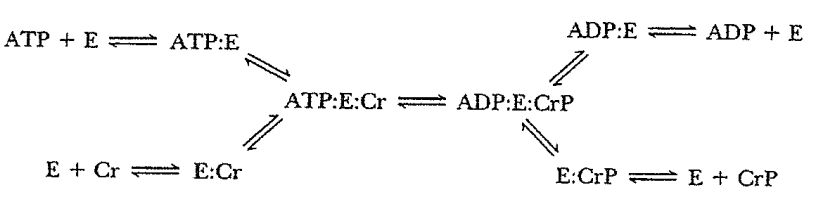 (A) yes, the mechanism is a double-displacement reaction. (B) yes, the reaction fits the ping-pong model. (C) no, the reaction is random single-displacement. (D) no, the reaction is double-displacement. (E) no, the reaction is order single-displacement.
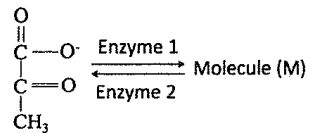 (A) When M is acetaldehyde, enzyme 1 is pyruvate decarboxylase. (B) When M is oxaloacetate, enzyme 1 is pyruvate carboxylase. (C) When M is phosphoenopyruvate, enzyme 2 is pyruvate kinase. (D) When M is malate, enzyme 2 is malic enzyme. (E) None of above is false.
 , lipoic acid, pyridoxal phosphate (PLP), and FAD. (E) The reaction is so important to energy production that pyruvate dehydrogenase operates at full speed under all conditions.
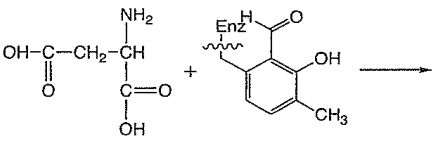 (A)
 (B)
 (C)
 (D)
 (E)
 (B)
 (C)
 (D)
 (E)