所屬科目:研究所、轉學考(插大)-普通生物學
1. Where is the antigen-binding site of this antibody? (A) site A (B) site B (C) site C (D) site D
2. Which structure is a type of connective tissue? (A) stratified squamous epithelium (B) cartilage (C) neuron (D) skeletal muscle
3. Many aphid species switch between asexual and sexual reproduction. Which of the following is only used during sexual reproduction? (A) mitosis (B) meiosis (C) parthenogenesis (D) fission
4. The monomers of DNA and RNA are (A) monosaccharides. (B) nucleotides. (C) fatty acids. (D) nucleic acids.
5. Which statement regarding the flow of genetic information is false? (A) Polypeptides form proteins that determine the appearance and function of the cell and organism. (B) Eukaryotic mRNA is processed in several ways before export out of the nucleus. (C) Transcription occurs in the cytoplasm of eukaryotic cells. (D) Ribosomes function as factories that coordinate the functioning of mRNA and tRNA.
6. HIV does the greatest damage to (A) the adrenal glands. (B) pancreatic cells. (C) nervous tissue. (D) white blood cells.
7. Genetic differences between populations tend to be reduced by (A) gene flow. (B) mutation. (C) the founder effect. (D) natural selection.
8. There is a mutation in the operator of the trp operon in a cell such that the trp repressor is unable to bind to the operator. If tryptophan is added to the cell, what will happen? (A) Tryptophan will bind to the repressor, and trp enzymes will be produced. (B) Tryptophan will bind to the repressor, and trp enzymes will not be produced. (C) Tryptophan will not bind to the repressor, and trp enzymes will be produced. (D) Tryptophan will bind to the operator, and trp enzymes will be produced.
9. Which of the following biological molecules contributes to the structural integrity of plant spores? (A) lignin (B) cellulose (C) chlorophyll (D) sporopollenin
10. Epithelial tissues (A)cause body movements. (B) cover both external and internal body surfaces. (C) sense stimuli. (D) form a framework that supports the body.
11. A scientist cultures the dried soup from a 4,000-year-old cooking pot found in an Egyptian tomb and obtains a distinctive species of prokaryote. She immerses a test tube of these bacteria in boiling water for several hours, but the colony grows back. This species is probably (A)halophilic. (B)endospore-forming. (C) a spirochete. (D) a cyanobacteria.
12. Which statement about genome sequencing is false? (A)The genomes of thousands of species have been completely sequenced. (B)The first eukaryotic organism to have its genome sequenced was yeast. (C) Most of the genomes that have been sequenced to date are eukaryotes. (D) The genome of a mouse has been sequenced.
13. A vaccine works by (A)inhibiting bacterial replication. (B)inhibiting viral replication. (C) stimulating the immune system. (D)preventing the translation of mRNA.
14. There is a mutation in the operator of the lac operon in a cell such that the lac repressor always stays bound to the operator. If lactose is added to the cell, what will happen? (A) Lactose will bind to the repressor, and lac enzymes will be produced. (B) Lactose will bind to the repressor, and lac enzymes will not be produced. (C) Lactose will not bind to the repressor, and lac enzymes will be produced. (D) Lactose will bind to the operator, and lac enzymes will be produced.
15. The major function of siRNAs is to (A)increase the rate of protein translation. (B)turn off gene expression. (C) prevent chromatin condensation. (D) support DNA replication.
16. Which of the following characteristics is functionally important in gametophyte cells of both angiosperms and gymnosperms? (A)diploid nuclei (B)mitochondria (C) endosperm (D)chloroplasts
17. Prokaryotes are classified into (A)domain Protista and domain Archaea. (B)kingdom Bacteria and kingdom Archaea. (C) domain Bacteria and domain Archaea. (D)kingdom Protista and kingdom Bacteria
18. ________ marks the end of a gene and causes transcription to stop. (A)A stop codon (B)RNA ligase (C) A terminator (D)Methionine
19. Vascular plant tissue includes all of the following cell types except (A)vessel elements. (B)sieve cells. (C) tracheids. (D) cambium cells.
20. Which type of organelle is primarily involved in the synthesis of oils, phospholipids, and steroids? (A)ribosome (B)lysosome (C) smooth endoplasmic reticulum (D)contractile vacuole
解釋名詞 (20%)1. Serial endosymbiosis theory
2. Biodiversity
3. Intron
4. Alternation of generations
5. Cytokinesis
問答題 (40%)1. 何謂演化學(evolution)以及它在醫學、農業等生命科學領域的應用?可以嘗試由達爾文的 natural selection 觀點、微演化(microevolution)或是巨演化(macroevolution)等方向進行闡
2. 說明魚鰓的 countercurrent exchange 機制以及功能?(10%)
3. 何謂 polyploidy?它形成的原因為何?(10%)
4. 原核生物與真核生物在基因之調控有何不同?(10%)
 阿摩線上測驗
登入
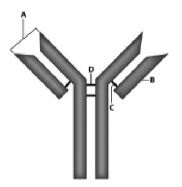 (A) site A (B) site B (C) site C (D) site D