所屬科目:研究所、轉學考(插大)◆生物化學
1. Which of the following statements about regulation of the lac operon is true? (A) Glucose in the growth medium does not affect the inducibility by lactose. (B) Glucose in the growth medium decreases the inducibility by lactose. (C) Glucose in the growth medium increases the inducibility by lactose. (D) Its expression is regulated mainly at the level of translation. (E) The lac operon is fully induced whenever lactose is present.
2. Which one of the following is not involved in steroid hormone action? (A) Transcription activation and repression (B) Hormone-receptor complexes (C) Specific DNA sequences (D) Cell surface receptors (E) Zinc fingers
3. The PCR reaction mixture does not include: (A) DNA containing the sequence to be amplified. (B) all four deoxynucleoside triphosphates. (C) heat-stable DNA polymerase. (D) oligonucleotide primer(s). (E) DNA ligase.
4. When bacterial DNA replication introduces a mismatch in a double-stranded DNA, the methyl-directed repair system: (A) cannot distinguish the template strand from the newly replicated strand. (B) changes both the template strand and the newly replicated strand. (C) corrects the mismatch by changing the newly replicated strand. (D) corrects the mismatch by changing the template strand. (E) corrects the DNA strand that is methylated.
5. Eukaryotes solve the problem of replicating the ends of their linear chromosomes by: (A) terminal redundancy whereby each end of the chromosome is duplicated allowing recombination. (B) enzyme activity that uses an RNA template and reverse transcription in a series of repeat cycles. (C) by covalently linking the two strands at each end of the linear chromosome to form a circle. (D) using a protein as a primer. (E) all of the above.
6. What chemical force does atomic force microscopy operate upon? (A) Hydrogen bond (B) Ionic force (C) Covalent bond (D) van der Waals (E) magnetic force
7. GPI stands for glycosylphosphatidylinositol that anchors a protein to a membrane. Which of the following is correct? (A) A GPI anchor is added when a protein is in the cytoplasm. (B) A GPI anchor is added when a protein is in the ER. (C) A GPI anchor is added when a protein is in the endosome. (D) A GPI anchor is added when a protein is in the Golgi apparatus. (E) A GPI anchor is added when a protein is in the plasma membrane.
8. What is the oxidation status of the carbon in methane? (A) -5 (B) -4 (C) -3 (D) -2 (E) -1
9. Which of the following reaction is it that is mediated by pyridoxal phosphate (Vitamin B6)? (A) Phosphorylation (B) Isomerization (C) Racemization (D) Glycosylation (E) Lipidation
10. Which of the following membrane lipid is it that serves as a eat-me signal in an apoptotic cell? (A) Phosphatidylinositol (B) Phosphatidylethanolamine (C) Phosphatidylserine (D) Phosphatidylcholine (E) Sphingosine-1-phosphate
11. Which of the following statements is correct regarding the biosynthesis of purine nucleotides? (A) Glycine, aspartate, and glutamine serve as nitrogen sources for the purine ring. (B) The concentration of 5-phosphoribosyl 1-pyrophosphate is the major factor regulating the rate of de novo purine nucleotide biosynthesis. (C) Lesch-Nyhan syndrome is caused by a defect in hypoxanthine-guanine phosphoribosyl transferase, an enzyme involved in purine salvage. (D) AMP and GMP inhibit hypoxanthine-guanine phosphoribosyl transferase, which converts hypoxanthine and guanine into IMP and GMP. (E) All of the above are correct.
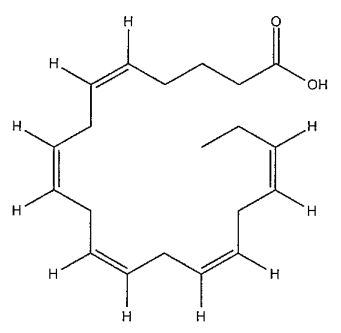
12. Which of the following is the correct nomenclature name for the unsaturated fatty acid shown below? (A) ω6, C20:5 (B) ω3, C20:5 (C) ω6, C20:6 (D) ω3, C20:6 (E) ω5, C20:5
13. Prostanoids are synthesized by (A) Pentose phosphate pathway (B) β-oxidation pathway (C) Lipoxygenase pathway (D) Cyclooxygenase pathway (E) All of the above are wrong
14. Which of the following compounds is not a ketone body? (A) Glycolic acid (B) Acetoacetate (C) D-3-Hydroxybutyrate (D) Acetone (E) All of the above are correct.
15. When fatty acids with an odd number of carbon atoms are oxidized via the β-oxidation pathway, which compound will propionyl-CoA be converted into? (A) Acetyl-CoA (B) Acetoacetyl-CoA (C) Succinyl-CoA (D) Malonyl-CoA (E) All of the above are wrong
16. During intense physical activity, NADH generated in glycolysis is rapidly reoxidized by which reaction? (A) Reduction of pyruvate to lactate by lactate dehydrogenase. (B) Conversion of glucose-6-phosphate to fructose-6-phosphate. (C) Oxidation of dihydroxyacetone phosphate to glycerol-3-phosphate. (D) Reduction of oxaloacetate to malate. (E) Formation of citrate from oxaloacetate and acetyl-CoA.
17. Arsenic poisoning inhibits which enzyme of the citric acid cycle, thereby impairing oxidative metabolism? (A) Citrate synthase. (B) Malate dehydrogenase. (C) α-Ketoglutarate dehydrogenase. (D) Fumarase. (E) Aconitase.
18. Which glycolytic product serves as the primary precursor for entry into the citric acid cycle? (A) 2-Phosphoglycerate. (B) Glyceraldehyde-3-phosphate. (C) Pyruvate. (D) Glucose-6-phosphate. (E) Fructose-1,6-bisphosphate.
19. Which polysaccharide is found in the plant cell wall and provides structural support? (A) Glycogen (B) Amylopectin (C) Cellulose (D) Starch (E) Chitin
20. Which of the following glycolytic intermediates is directly involved in the generation of ATP through substrate-level phosphorylation? (A) Glucose-6-phosphate. (B) Phosphoenolpyruvate. (C) Fructose-1,6-bisphosphate. (D) Glyceraldehyde-3-phosphate. (E) 3-phosphoglycerate.
21. What is the major driving force for the formation of tertiary structures in cytoplasmic proteins? (A) Formation of peptide bonds. (B) Hydrogen bonding between backbone atoms. (C) Hydrophobic interactions among nonpolar side chains. (D) Covalent bonding between side chains of amino acids. (E) Ionic interactions between side chains of amino acids.
22. What is the most obvious structural feature that differentiates parallel β-sheets from antiparallel β-sheets? (A) The total number of the hydrogen bonds. (B) The direction of the peptide chains relative to each other. (C) The amino acid composition of the strands. (D) The presence of disulfide bonds. (E) The length of strands in the sheet.
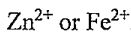
23. In a cytoplasmic and globular protein, where would you most likely find hydrophobic amino acids? (A) On the surface of the protein. (B) In the interior of the protein. (C) Randomly distributed throughout the protein. (D) In the α-helices of a protein. (E) Around metal ions, such as .
24. What effect does a competitive inhibitor have on enzyme kinetics? (A) Decreases and does not change (B) Increases and does not change (C) Decreases both and (D) Does not affect either or . (E) Increases and decreases
25. In Michaelis-Menten kinetics, what assumption is made about the enzyme-substrate complex during the steady-state phase of the reaction? (A) The concentration of the enzyme-substrate complex is constant. (B) The enzyme is saturated with substrate. (C) Product concentration remains constant. (D) The product is formed as soon as the substrate binds to the enzyme. (E) The enzyme binds to substrate irreversibly.
26. Which following statement is correct in human cells? (A) Catabolism is usually an endergonic reaction in human cells. (B) Most metabolisms follow the thermodynamic laws, but few do not follow the first law of thermodynamics because human beings need to eat every day. (C) Anabolism often comes along with ATP generation in human cells. (D) The Complex III in the oxidative phosphorylation is not a proton pump. (E) Cytochrome C is a proton carrier that delivers the proton to Complex IV in oxidative phosphorylation.
27. What is the amino acid residue in glycogenin able to form a covalent bond with a glucose residue in the glycogen complexes? (A) serine (B) asparagine (C) tyrosine (D) glutamine (E) threonine.
28. Which following enzyme can generate 5'-AMP? (A) phosphodiesterase (B) adenylyl kinase (C) phosphorylase (D) protein phosphatase-1 (E) heme oxygenase.
29. Which following one is an essential amino acid for human cells? (A) proline (B) cysteine (C) serine (D) glycine (E) phenylalanine.
30. What type of cells is responsible for heme catabolism in the human liver? (A) Kupffer cells (B) Reticuloendothelial cells (C) Stellate macrophages (D) Hepatic stellate cells (E) Hepatocytes.
31. Which term below describes the RNA synthesis process using the DNA template? (A) Translation (B) Transcription (C) Replication (D) Splicing (E) Elongation
32. Which subunit described below is not a component of E. coli RNA polymerase? (A) α (B) β (C) ω (D) σ (E) ε
33. Which below class of RNA encodes protein? (A) mRNA (B) rRNA (C) tRNA (D) snRNA (E) siRNA
34. Which RNA processing can protect RNA from a 3' -> 5' exonuclease attack? (A) Splicing (B) 5' capping (C) 3' polyadenylation (D) Termination (E) Phosphorylation
35. Which below rRNA is not from RNA processing of pre-rRNA transcript (45S rRNA)? (A) 5.8S rRNA (B) 5S rRNA (C) 18S rRNA (D) 28S rRNA (E) None of the above all
36. Which one of the following hormones acts through ion channel linked receptor mechanism? (A) Cortisol (B) Progesterone (C) Thyroxine (D) Acetylcholine (E) Epinephrine
37. Which one of the following is NOT a general feature of hydrophilic hormones? (A) They are proteins and polypeptides. (B) They do not need a transport protein. (C) They bind to intracellular receptor. (D) Their plasma half-life is short in minutes. (E) They act through second messenger.
38. To which level of protein structure does hemoglobin belong due to its multiple polypeptide chains? (A) Primary structure (B) Secondary structure (C) Tertiary structure (D) Quaternary structure (E) None of the above
39. In the phosphatidylinositol pathway, which molecule acts as a second messenger to release calcium from the endoplasmic reticulum? (A) DAG (Diacylglycerol) (B) CAMP (Cyclic AMP) (C) IP3 (Inositol trisphosphate) (D) cGMP (Cyclic GMP) (E) None of the above
40. Thyroid hormones (T3 and T4) are synthesized from which amino acid? (A) Tyrosine (B) Tryptophan (C) Serine (D) Methionine (E) Phenylalanine
41. Which wavelength is used to measure protein concentration using spectrophotometry? (A) 230 nm (B) 240 nm (C) 260 nm (D) 280 nm (E) 300 nm
42. What is the post-translational modification that marks proteins for degradation by the 26S proteasome? (A) Phosphorylation (B) SUMOylation (C) Ubiquitination (D) Glycosylation (E) Acetylation
43. Which lipoprotein is degraded from very-low-density lipoprotein (VLDL) and serves as the major carrier of cholesterol in the bloodstream? (A) Chylomicrons (B) High-density lipoprotein 2 (HDL2) (C) High-density lipoprotein 3 (HDL3) (D) Intermediate-density lipoprotein (IDL) (E) Low-density lipoprotein (LDL)
44. Which of the following is a nucleotide, composed of a nitrogenous base, a pentose sugar, and a phosphate group? (A) Adenylate (B) Guanosine (C) Thymine (D) Deoxycytidine (E) Uridine
45. Which enzyme catalyzes the rate-limiting step in cholesterol synthesis? (A) HMG-CoA synthase (B) HMG-CoA reductase (C) Squalene synthase (D) Mevalonate kinase (E) Acetyl-CoA carboxylase
46. Which posttranslational modification is involved in proteasome-mediated protein degradation: (A) Myristoylation (B) Palmitoylation (C) Isoprenylation (D) SUMOylation (E) Ubiquitylation
47. In eukaryotic translation initiation, which component is required for recognizing the 5' poly-A tail of mRNA: (A) eIF1A (B) eIF2B (C) eIF3 (D) eIF4G (E) eIF5
48. A cDNA library contains sequences of: (A) A collection of genomic DNA fragments (B) A collection of microRNAs (C) A collection of mRNAs (D) A collection of mitochondrial DNA (E) All of above
49. Acetylation and methylation commonly occur on which amino acid residue in histones, influencing chromatin structure? (A) Serine (B) Lysine (C) Threonine (D) Tyrosine (E) Histidine
50. Glycosylation, the addition of sugar moieties, can occur on which amino acid residues? (A) Lysine and Arginine (B) Asparagine, Serine, and Threonine (C) Glutamate and Aspartate (D) Valine and Isoleucine (E) Methionine and Cysteine
 阿摩線上測驗
登入
 .
 and does not change
 (B) Increases
 and does not change
 (C) Decreases both
 and
 (D) Does not affect either
 or
 . (E) Increases
 and decreases
