所屬科目:研究所、轉學考(插大)◆生物化學
1. Which statement about the structure of the DNA double helix (B-form) is true? (A) The bases occupy the outer surface of the helix. (B) The two strands are parallel, both in the 5'-3' direction. (C) The sugar-phosphate backbone forms the minor groove. (D) The helical twist is left-handed in B-form DNA. (E) There are ~10.5 base pairs per turn in B-form DNA.
2. In Sanger DNA sequencing, what is the key feature of the dideoxynucleotide (ddNTP)? (A) It only pairs with guanine bases. (B) It contains a sulfur group on the 3' carbon. (C) It lacks both the 2' and 3' hydroxyl group, causing chain termination. (D) It forms extra hydrogen bonds with the template strand. (E) It cuts DNA strands at specific palindromic sequences.
3. A student introduces a specific mutation in a gene by using polymerase chain reaction (PCR) with a primer containing a single nucleotide change. This method is known as: (A) site-directed mutagenesis (B) southern blot hybridization (C) PCR reaction (D) DNA microarray analysis (E) CRISPR interference
4. Which of the following is a second messenger in signal transduction pathways? (A) Insulin (B) ATP (C) G protein β subunit (D) CAMP (E) Tyrosine kinase
5. The hyperchromic effect observed when DNA is denatured refers to: (A) The decrease in absorbance at 260 nm upon separation of strands. (B) The increase in absorbance at 260 nm when strands separate. (C) The increase in absorbance at 260 nm when strands are degraded. (D) The shift in absorbance peak to 280 nm after hydrolysis. (E) The shift in absorbance peak to 260 nm after hydrolysis.
6. What deficiency would lead to the symptom of pernicious anemia? (A) Vitamin B12 (B) Vitamin C (C) Biotin (D) Vitamin E (E) Calcium cation
7. Which enzyme controls free guanine and hypoxanthine salvage? (A) Adenosine phosphoribosyltransferase (B) Hypoxanthine-guanine phosphoribosyltransferase (C) Purine aminotransferase (D) Purine amidotransferase (E) Ribonucleotide reductase
8. How much free ammonia would one AMP catabolism lead to? (A) 2 (B) 3 (C) 4 (D) 5 (E) 6
9. What type of secondary structure shown below is? (A) Type I α turn (B) Type II α turn (C) Type I β turn (D) Type II β turn (E) Type III β turn
10. According to the Bohr effect, given the following graph, how much more O2 can be delivered by hemoglobin to the peripheral tissue when the peripheral tissue elevates the concentration of CO2?
(A) 20% (B) 30% (C) 35% (D) 40% (E) 45%
11. Which amino acid catabolism can lead to the formation of α-ketoadipate? (A) Methionine, Histidine (B) Glycine, Cysteine (C) Leucine, Serine (D) Lysine, Tryptophan (E) Valine, Phenylalanine
12. Which of the following statements about fatty acids is correct? (A) Fatty acids are primarily stored in the body as triglycerides in muscle tissue. (B) Fatty acids with a higher number of double bonds tend to be more hydrophobic. (C) Omega-3 fatty acids are known to be beneficial for cardiovascular health. (D) Fatty acids are not involved in energy metabolism under normal conditions. (E) Short-chain fatty acids are typically found in significant amounts in dietary fats.
13. Cholesterol is synthesized from: (A) acetyl-CoA (B) malate (C) oxalate (D) lipoic acid (E) choline
14. The precursor of paracrine hormones such as prostaglandins is: (A) Palmitate (B) arachidonate (C) oleate (D) ceramide (E) steroid
15. Ketone bodies are used as fuels in all tissues except liver, which lacks: (A) β-ketoacyl-CoA transferase (B) HMG-CoA synthase (C) HMG-CoA reductase (D) HMG-CoA lyase (E) thiolase
16. Acyl carrier protein (ACP) is an important part of fatty acid biosynthesis because: (A) ACP binds the final product of fatty acid synthase to transport it to other places in the cell. (B) ACP connects the acetyl-CoA carboxylase with fatty acyl chain. (C) ACP covalently links with the acyl group from one active site to another in sequence. (D) ACP is essential only for the thioesterase activity that releases the product fatty acid from the enzyme. (E) ACP provides a way to store pantothenic acid when abundant so it is available during times when the amount of this vitamin in the diet is inadequate.
17. How many are reduced in the degradation of palmitoyl-CoA to form eight molecules of acetyl-CoA? (A) 1 (B) 7 (C) 8 (D) 14 (E) 16
18. Insulin is able to stimulate some lipid synthesis, including:
(1) cholesterol (2) fatty acid (3) phospholipids (4) triacylglycerol (5) sphingolipids (A) (2) and (4) (B) (1), (2), and (5) (C) (2), (3), and (4) (D) (2) only (E) (1), (2), and (4)
19. In amino acid catabolism, the first reaction for many amino acids is a(n): (A) oxidative deamination requiring NAD+. (B) hydroxylation requiring NADPH and O2. (C) transamination requiring pyridoxal phosphate (PLP). (D) reduction requiring pyridoxal phosphate (PLP). (E) decarboxylation requiring thiamine pyrophosphate (TPP).
20. The light-induced changes in chloroplasts which regulate key Calvin cycle enzymes include all except: (A) activation of rubisco activase. (B) Mg2+ efflux from the thylakoid lumen. (C) changes in stromal pH. (D) generation of reducing power. (E) All are true.
21. Initiation of gluconeogenesis occurs in the pyruvate carboxylase reaction, which converts pyruvate to oxaloacetate. In this pyruvate carboxylase catalyzed reaction, bicarbonate is "activated" by attachment to the _____ of ATP to form _____. (A) β-phosphate; carbonyl ADP (B) α-phosphate; carbonyl AMP (C) α-phosphate; carbonylphosphate (D) γ-phosphate; carbonylphosphate (E) γ-phosphate; carbonyl AMP
22. The oxidation of a particular hydroxy substrate to a keto product by mitochondria has a P/O ratio of less than 2. The initial oxidation step is very likely directly coupled to the: (A) oxidation of a flavoprotein. (B) oxidation of a pyridine nucleotide. (C) reduction of a flavoprotein. (D) reduction of a pyridine nucleotide. (E) reduction of cytochrome a3.
23. The NADH produced by glycolysis produces different amounts of ATP in different tissues. This is because: (A) different tissues have different shuttle system to transport cytosolic NADH into mitochondria. (B) the averaged amounts of mitochondria in the cells of different tissues are different. (C) the efficiency of the respiratory chain in different tissues are different. (D) some tissues can utilize cytosolic NADH to produce ATP; however, some tissues cannot. (E) different tissues have different energy need.
24. Energy balance in the cell (ATP/ADP/AMP levels) is an important factor in the metabolic pathways we have studied. How does this regulation take place? (A) ATP, ADP and/or AMP bind to DNA to modulate transcription of genes for enzymes involved in metabolism. (B) ATP, ADP and/or AMP bind to enzymes involved in metabolism, allosterically changing the enzyme activity. (C) High levels of ATP result in nonenzymatic phosphorylation of the enzymes involved in metabolism, changing their activity. (D) High levels of ATP result in excessive production of cyclic AMP, causing activation of pathways such as glycogenolysis and gluconeogenesis. (E) None of the above.
25. When a muscle is stimulated to contract aerobically, less lactic acid is formed than when it contracts anaerobically because: (A) glycolysis does not occur to significant extent under aerobic conditions. (B) muscle is metabolically less active under aerobic than anaerobic conditions. (C) the lactic acid generated is rapidly incorporated into lipids under aerobic conditions. (D) under aerobic conditions in muscle, the major energy-yielding pathway is the pentose phosphate pathway, which does not produce lactate. (E) under aerobic conditions most of the pyruvate generated as a result of glycolysis is oxidized by the citric acid cycle rather than reduced to lactate.
26. Glutamine provides the critical entry point for the amine resource. Which statement is correct? (A) Glutamine synthetase is active when adenylation. (B) Glutamine synthetase is modulated by PIII protein. (C) Adenylyl transferase promotes uridylylation/deuridylylation of glutamine synthetase. (D) The active/inactive glutamine synthetase is also modulated by uridylyl transferase. (E) Glutamine is the primary molecule carrying CO2.
27. Which statement about the transition state of an enzyme-catalyzed reaction is true? (A) The transition state is identical to the enzyme-substrate complex. (B) The transition state always has a lower free energy than the substrate. (C) Enzymes form a lower-energy transition state complex, reducing activation energy. (D) The transition state cannot be bound by an enzyme due to its instability. (E) Enzymes stabilize the substrate more than the transition state.
28. The tautomeric forms of bases can lead to: (A) Base-pair mismatches and spontaneous mutations. (B) Higher melting temperature (Tm). (C) Increased stability of the DNA helix. (D) Covalent bonds between bases across strands. (E) Accelerated replication speed in eukaryotes.
29. When a ligand binds a receptor tyrosine kinase, the first step in the signaling cascade is usually: (A) Conversion of GTP to cGMP. (B) GTP hydrolysis by the α-subunit of the G protein. (C) CAMP formation by adenylyl cyclase. (D) Internalization of the receptor into lysosomes. (E) Auto-phosphorylation of specific tyrosine residues on the receptor.
30. What role does phospholipase C play in signal transduction? (A) Activates adenylate cyclase. (B) Produces IP3 and DAG from phosphatidylinositol 4,5-bisphosphate (PIP2). (C) Converts cAMP to AMP. (D) Activates protein kinase C directly. (E) Converts GTP to GDP.
31. Which of the following equations represents the Michaelis-Menten equation? (A) (B)(C)(D)(E) ν = E-[ES]
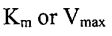
32. What is the effect of a competitive inhibitor on an enzyme-catalyzed reaction? (A) Has no effect on either (B) Increases without affecting . (C) Increases without affecting (D) Decreases without affecting (E) Decreases
33. Which of the following statements is incorrect regarding the cholesterol metabolism? (A) Chylomicrons contain a high portion of cholesterol, which are synthesized from dietary fats in the endoplasmic reticulum of enterocytes. (B) Cholesteryl esters are formed in the liver, converting the cholesterol to a more hydrophobic form that can be carried in lipoproteins to tissues that need cholesterol. (C) Bile acids, one of the forms of cholesterol exported from the liver, are the principal components of bile, a fluid stored in the gallbladder and excreted into the small intestine. (D) The uptake of cholesterol from the bloodstream is regulated by receptor-mediated endocytosis. (E) Excess cholesterol in extrahepatic tissues, including macrophages and foam cells, is transported back to the liver in reverse cholesterol transport.
34. Ketone bodies can be the fuel source to support the whole-body metabolism. Which of the following statements regarding ketone bodies is correct? (A) Acetoacetate, β-ketobutyrate, and acetone are the three main types of ketone bodies produced in the liver. (B) Ketone body production leads to a decrease in blood pH, which can result in ketoacidosis if the production exceeds the body's ability to utilize them. (C) Ketone bodies are produced during the citric acid cycle, but only when there is an excess of glucose in the body. (D) In the fasting state, the body increases ketone body production to spare glucose for the brain because ketone bodies cannot cross the blood-brain barrier. (E) Ketone bodies are synthesized from glucose in patients with diabetes because of the insufficient of insulin level.
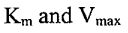
35. Which of the following is not required in the biosynthesis of fatty acids? (A) Acetyl-CoA (B) Biotin (C) (D) Malonyl-CoA (E) NADH
36. The enzymes of fatty acid oxidation are located in the mitochondria matrix, so free fatty acids must be transported through the shuttle into the mitochondria. Which of the following statements regarding the shuttle is correct? (A) Free fatty acid must be activated by a fatty acyl-CoA synthetase, through the hydrolysis of one high-energy bond in ATP, to yield a fatty acyl-CoA before entering the shuttle. (B) The enzyme responsible for esterifying carnitine with acyl-CoA in both inner and outer mitochondria membranes is the rate-limiting step for oxidation. (C) Coenzyme A in the cytosol is largely used in the oxidative degradation of fatty acids. (D) This shuttle plays a crucial role in transporting medium-chain fatty acids into the mitochondria for beta-oxidation. (E) Fatty acyl-CoA destined for mitochondria oxidation must be attached to carnitine to be shuttled across the inner mitochondria membrane.
37. The unsaturated fatty acid contains one or more double bonds. Which of the following statements regarding the metabolism of unsaturated fatty acid is correct? (A) The double bonds of unsaturated fatty acids are in the cis configuration, making them to easily react with hydratase for oxidation. (B) When oxidizing an unsaturated fatty acid, the double bond must be first reduced to a single bond before it can be further processed in the beta-oxidation pathway. (C) The unsaturated fatty acid, compared to saturated fatty acid with the same carbon numbers, causes a change of acetyl-CoA production in the oxidation pathway. (D) The oxidation of a monounsaturated fatty acid may skip one reaction of dehydrogenation during beta-oxidation due to the presence of the cis double bond in the fatty acid chain. (E) The oxidation of unsaturated fatty acids requires the cofactor biotin to catalyze the reaction.
38. Which of the following are involved in the development of atherosclerosis? (1) Excess LDL (2) Inflammation (3) Adhesion molecules (4) Monocytes (A) (1), (2), and (4) (B) (1) only (C) (1), (2), and (3) (D) (1), (3), and (4) (E) All of these
39. The reactions involved in β-oxidation of fatty acids include the following:
(1) Cleavage of acetyl-CoA from the fatty acid.
(2) Hydration of a double bond.
(3) Formation of a C-C double bond.
(4) Oxidation of an alcohol.
The correct order of these reactions is: (A) (1) → (2) → (3) → (4) (B) (2)→(4)→(3) → (1) (C) (1)→(4) → (3) → (2) (D) (4)→(3) → (2) → (1) (E) (3) → (2) → (4) → (1)
40. The citric acid (CA) cycle is considered part of aerobic metabolism even though oxygen does not appear explicitly in any reaction because: (A) it takes place in the mitochondrion. (B) it contains oxidation reactions. (C) the NADH and FADH2 produced are reoxidized in the electron transport chain linked to oxygen. (D) the reoxidation of NADH and FADH2 leads to the production of considerable quantities of ATP. (E) None of above is correct.
41. Which of the following statements about the Calvin cycle (CC) is correct? (A) CC is present in all photosynthetic eukaryotes and also many photosynthetic bacteria. (B) Reactions in CC utilize CO2, ribulose-1,5-bisphosphate to synthesize glucose. (C) Many reshuffling reactions in CC are like those of the pentose phosphate pathway. (D) Many reactions in CC involve transaldolase and transketolase. (E) All of above are correct.
42. _____ is often used in carboxylation reactions while _____ is often used in decarboxylation reactions. (A) thiamine pyrophosphate; lipoate (B) lipoate; biotin (C) biotin; thiamine pyrophosphate (D) pyridoxal-5-phosphate; biotin (E) lipoate; pyridoxal-5-phosphate
43. All are uses of glucose-6-phosphate in liver except : (A) catabolized to acetyl-CoA for fatty acid biosynthesis. (B) generate NADPH and pentoses. (C) released as glucose to blood stream. (D) converted to glycogen. (E) All are true.
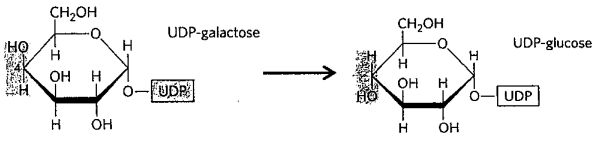
44. Which of the following enzymes catalyzes the conversion shown below? (A) Hexose isomerase (B) UDP-galactose 4-isomerase (C) UDP-galactose 4-mutase (D) Phosphoglucose mutase (E) UDP-glucose 4-epimerase
45. All of the following are fuels for contracting muscles during strictly anaerobic metabolism except : (A) ATP. (B) creatine phosphate. (C) glycogen. (D) glucose. (E) palmitic acid.
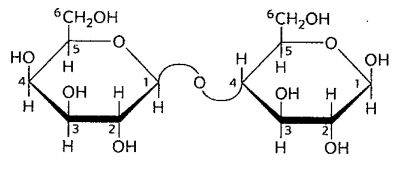
46. Which of the followings best describes the glycosidic bond below? (A) β(2-4) (B) α(1-3) (C) α(1-4) (D) β(1-4) (E) α(2-4)
47. Which type of columns are affected by the ionic charge, shape, substrate-binding strength of a protein, respectively? (A) Gel filtration, Affinity chromatography, Cation or anion exchange. (B) Affinity chromatography, Gel filtration, Cation or anion exchange. (C) Cation or anion exchange, Gel filtration, Affinity chromatography. (D) Gel filtration, Cation or anion exchange, Affinity chromatography. (E) Cation or anion exchange, Affinity chromatography, Gel filtration.
48. 2,4-Dinitrophenol and oligomycin inhibit mitochondrial oxidative phosphorylation. 2,4-Dinitrophenol is an uncoupling agent; oligomycin blocks the ATP synthesis reaction itself. Therefore, 2,4-dinitrophenol will: (A) allow electron transfer in the presence of oligomycin. (B) allow oxidative phosphorylation in the presence of oligomycin. (C) block electron transfer in the presence of oligomycin. (D) diminish O2 consumption in the presence of oligomycin. (E) None of the above.
49. All are physiological changes initiated by glucagon except : (A) activation of glycogenolysis in liver. (B) stimulation of liver gluconeogenesis. (C) long-term maintenance of steady-state levels of glucose in the blood stream. (D) activation of glycogenolysis in muscles. (E) All are true.
50. A molecule such as 2,4-dinitrophenol (2,4-DNP) works to uncouple the proton gradient. Which of the following is true about 2,4-DNP? (A) 2,4-DNP is protonated in the matrix and deprotonated in the intermembrane space. (B) The presence of an uncoupler results in an increase in the activity of the TCA cycle and electron transport. (C) 2,4-DNP is a very ineffective uncoupler because its hydrophobic structure prevents it from effectively crossing lipid bilayer membranes. (D) 2,4-DNP has been used as a very effective diet aid for the past 70 years. (E) None of the above is correct.
 阿摩線上測驗
登入
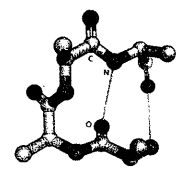 (A) Type I α turn (B) Type II α turn (C) Type I β turn (D) Type II β turn (E) Type III β turn
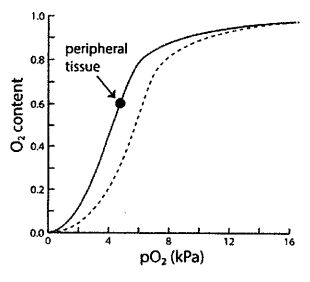 (A) 20% (B) 30% (C) 35% (D) 40% (E) 45%
 are reduced in the degradation of palmitoyl-CoA to form eight molecules of acetyl-CoA? (A) 1 (B) 7 (C) 8 (D) 14 (E) 16
 (B)
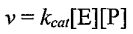 (C)
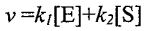 (D)
 (E) ν = E-[ES]
 (B) Increases
 without affecting
 . (C) Increases
 without affecting
 (D) Decreases
 without affecting
 (E) Decreases
 (D) Malonyl-CoA (E) NADH
 (A) Hexose isomerase (B) UDP-galactose 4-isomerase (C) UDP-galactose 4-mutase (D) Phosphoglucose mutase (E) UDP-glucose 4-epimerase
 (A) β(2-4) (B) α(1-3) (C) α(1-4) (D) β(1-4) (E) α(2-4)