所屬科目:研究所、轉學考(插大)◆生物化學
1. Which of the following statements about the EGF and LCGF treatments is LEAST likely? (A) Some cell types have receptors for more than one growth factor. (B) Hepatoma cells have an LCGF receptor but not an EGF receptor. (C) EGF and LCGF trigger growth by binding with different affinities to the same receptor. (D) Growth factors show some specificity regarding target cell type. (E) Both normal and tumor cells can respond to growth factors.
2. Cultured fibroblasts were labeled with 32P-ortho-phosphate. Subsequent EGF treatment increased the radioactivity detected in a small subset of total cell proteins. Which of the (A) EGF acts as a protein phosphatase. (B) EGF activates a protein kinase. (C) EGF activates an ATPase. (D) EGF is phosphorylated. (E) The activated receptor acts as a protein phosphatase.
3. When the divalent antibody was made monovalent by separating the antigen-binding domains (Fabs) from the constant domain (F), the Fab portion, but not the F. portion, bound the EGF receptor. Neither portion triggered cell proliferation. Which of the following conclusions is best supported by these results? (A) EGF binds a divalent antibody but not a monovalent antibody. (B) Signal transduction requires EGF or a monovalent antibody. (C) Binding of the Fab portion alone leads to internalization of the receptor. (D) Only a divalent antibody recognizes the binding site for EGF. (E) Dimerization of EGF receptors by a divalent antibody leads to signal transduction.
4. Which of the following accounts for the extent of proliferation observed in the retrovirus-infected cells not treated with growth factors? (A) The v-erbB product has a function similar to that of activated EGF receptor. (B) EGF binds to both the EGF receptor and the v-erbB product. (C) The v-erbB product activates both the LCGF and the EGF receptors. (D) The v-erbB product antagonizes the action of the EGF receptor. (E) The v-erbB product induces secretion of EGF and LCGF.
5. Which of the following enzymes plays a direct role in the biosynthesis of collagen? (A) Prolyl hydroxylase (B) Tyrosine hydroxylase (C) Choline oxidase (D) Monoamine oxidase (E) Tryptophan oxygenase
6. Some pharmaceutical companies try frantically to find inhibitors of telomerase. A telomerase inhibitor could, in theory, be used in an attempt to (A) Boost the synthesis of muscle proteins. (B) Prevent viral infections. (C) Cure cancer. (D) Cure AIDS. (E) Make people immortal.
7. Cyanide is a potent inhibitor of cell respiration that prevents the oxidation of all nutrients. Cyanide will therefore definitely reduce the cellular concentration of : (A) Heme groups. (B) FADH2. (C) CoA. (D) ATP. (E) SAM.
8. A hydropathy plot is used to: (A) Determine the water-solubility of a protein (B) Deduce the water content of a native protein (C) Estimate for the true molecular weight of a membrane protein (D) Deduce the quaternary structure of a membrane protein (E) Predict whether a given protein sequence contains membrane-spanning segments
9. B-sheets are stabilized by which of the force? (A) Hydrophobic interaction (B) Vanderwall force (C) Hydrogen bonds between the (CO) and the (NH) units in the peptide backbone (D) Hydrogen bonding between the R groups of polypeptide chains (E) Hydrogen bonds between adjacent segments.
10. Sickle cell anemia is a molecular disease of hemoglobulin. The altered properties of hemoglobin S result from a single amino acid mutation. The following statement which is right? (A) a Leu instead of a Asp residue (B) a Ile instead of a Asn residue (C) a Val instead of a Glu residue (D) a Leu instead of a Gln residue (E) a Met instead of a Asn residue
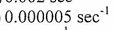
11. When saturated, it was found that a solution containing 0.0001 M of enzyme A can catalyze the breakdown of 0.05 M substrate in 1 second. The kcat of enzyme A is: (A) (B) (C) (D) (E)
12. Hexokinase has a Km of 0.05 mM for D-glucose and a Km of 1.5 mM for D-fructose. Please choose the correct statement(s) based on this information.
I: Hexokinase has a greater affinity for D-fructose than for D-glucose.
II: D-fructose is a better substrate for hexokinase than D-glucose.
III: It takes less D-glucose for the reaction to reach "half " than D-fructose.
IV: Hexokinase has a higher kcat for D-glucose than for D-fructose. (A) II (B)III (C)II, III, IV (D) I, II, III (E)II, III
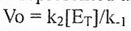
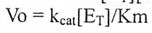
13. According to the steady state kinetics, the initial velocity of an enzyme-catalyzed reaction at very low [S] can be represented as (A)(B) (C)(D) (E)
14. To express a human gene in E. coli, the expression vector must possess which of the following features?
I. Promoter and terminater sequences for transcription.
II. Appropriate fusion tags.
III. CEN and TEL sequences.
IV. Ribosome binding site. (A) I, II, III, IV (B) I, III, IV (C) II, III, IV (D) I, III (E) I, IV
15. Which of the following enzymes is absolutely required for the construction of cDNA library? (A) reverse transcriptase (B) polynucleotide kinase (C) terminal transferase (D) DNA polymerase I (E) DNA topoisomerase
16. Which of the following tRNA anticodon is complementary to the mRNA codon 5'UCG3'? (A) 5'AGC3' (B) 5'AGU3' (C) 5'UGA3' (D) 5'UGG3' (E) 5'CGG3'
17. Which one of the following statements in regard to the prokaryotic transcription and translation is incorrect? (A) RNA polymerase transcribes all of mRNA, tRNA, and rRNA. (B) One mRNA encodes one protein (C) Lactose operon is regulated by CAMP (D) Transcription is coupled with translation (E) Transcription does not occur in nucleus
18. Ribosome group A was labeled with and ribosome group B was labeled with . Six hours after addition of both ribosome groups to an in vitro translation system, how many bands of 70S ribosomes are you expected to appear in a density gradient? (A) 1 (B) 2 (C) 3 (D) 4 (E) 5
19. Which one of the following statements in regard to Rho-dependent transcriptional termination in prokaryotes is incorrect? (A) Hexamer of Rho factor binds to upstream G-rich region (B) Rho binds to transcript and pursues RNA polymerase (C) Rho catches up RNA polymerase when RNA hairpin forms and RNA polymerase pauses (D) Rho helicase releases transcript and causes termination (E) Rho can be recycled and binds to new transcript
20. Which of the following splicing needs enzymatic activity of protein for cleavage? (A) Group I self-splicing (B) Group II self-splicing (C) Nuclear rRNA processing (D) Nuclear tRNA intron splicing (E) None of above
21. Which of the following compounds can activate G protein? (A) Norepinephrine (B) Phorbol ester (C) Ouabain (D) Insulin (E) Erythropoietin
22. What is the molecular size of immunoglobin G? (A) 5 kDa (B) 50 kDa (C) 150 kDa (D) 1 nm in diameter of the molecule (E) 5 nm in diameter of molecule
23. Which of the following assays can be used to determine cytokine concentration in the blood? (A) polymerase chain reaction (B) agarose gel electrophoresis (C) polyacrylamide gel electrophoresis (D) enzyme immunoassay (E) isoelectric focusing
24. Which of the following amion acids can undergo a series of reaction to form the particular odor of feces? (A) Glutamate (B) Asparagine (C) Tryptophan (D) Arginine (E) Tyrosine
25. Iodination can occur in which functional group in the proteins? (A) -NH2 group (B) -OH group (C) -COOH group (D) glyco-moiety (E) phenyl group
26. Which of the following has lowest melting point? (A) palmitic acid (16:0) (B) stearic acid (18:0) (C) oleic acid (18:1, △9) (18:3, 16,9,12)(D)-linolenic acid (E) Eicosapentaenoic acid
27. Which of the following is an important lipid in red blood cell membrane? (A) cholesterol (B) cholesteryl ester (C) triacylglycerol (D) bile acid (E) Free fatty acid
28. Which of the following is not a ketone body? (A) acetone (B) acetyl-CoA(C) acetoacetate (D) -3-hydroxybutyrate (E) none of above
29. Which of the following is an activator of Lecithin-cholesterol acyltransferse? (A) Apo A-I (B) Apo B-48 (C) Apo B-100 (D) Apo C-II (E) Apo E
30. What is the major target of statins (a group of hypocholesterolemic drug)? (A) Cholesterol 7 -hydroxylase (B) Fatty acid synthase (C) HMG-CoA reductase (D) acetyl-CoA carboxylase (E) acyl-CoA synthetase
31. What are the general characteristics of catabolism in biological systems? (A) endergonic reaction and ATP consumption (B) endergonic reaction and ATP generation (C) exergonic reaction and ATP consumption (D) exergonic reaction and ATP generation (E) no energy changes.
32. Which following group of oxidoreductases does catalase belong to? (A) oxidases (B) dehydrogenases (C) hydroperoxidases (D) oxygenases (E) hydroxylases.
33. Which enzyme is not involved in glycogen synthesis from glucose to glycogen? (A) hexokinase (B) glucan transferase (C) phosphoglucomutase (D) UDPGIc pyrophosphorylase (E) glycogen synthase.
34. What is one unit of urea biosynthesized from? (A) two units of NH4+ and one unit of CO2 (B) one unit of as well as one ne unit of carboxyl and amino groups of arginine (C) one unit of , one carboxyl group of aspartate, and one unit of amino group of arginine (D) one unit of , one carboxyl group of arginine, and one unit of amino group of aspartate (E) one unit of , one unit of CO2 and one unit of amino group of aspartate.
35. Which following enzyme is not in mitochondria? (A) uroporphyrinogen decarboxylase (B) protoporphyrinogen oxidase (C) ferrochelatase (D) carbamoyl phosphate synthase I (E) ornithine transcarbamoylase.
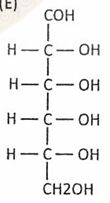
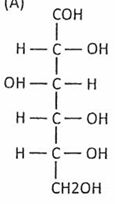
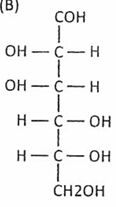
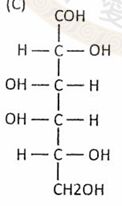
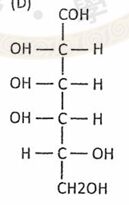
36. Which of the following structure is the correct Fischer projection of D-glucose? (A)(B)(C)(D)(E)
37. Three among the ten glycolytic enzymes catalyze chemical reactions which are principally irreversible in physiological conditions. They are (A) Hexokinase, phosphofructokinase-1, pyruvate kinase (B) Hexokinase, phosphoglycerate kinase, pyruvate kinase (C) Hexokinase, phosphofructokinase-1, phosphoglycerate kinase (D) phosphofructokinase-1, phosphoglycerate kinase, pyruvate kinase (E) None of the above
38. Considering the structural complexity of carbohydrates, it is not surprising that many of the cell surface molecules are glycoproteins and particular combinations of various glycoproteins can serve as identification of specific cell types. In these glycoproteins the carbohydrate moiety is added to the side chain of which amino acid? (A) Serine via an O-glycosidic bond (B) Tyrosine via an O-glycosidic bond (C) Lysine via an N-glycosidic bond (D) Histidine via an N-glycosidic bond (E) All the above are possible
39. Which of the following statements about glycogen is/are WRONG ? (A) Glycogen is important energy storage of animals although the storage capacity will be depleted within hours without any exogenous source of energy. (B) Breakdown of glycogen is performed by glycogen phosphorylase, which converts one glucose moiety to glucose-6-phosphate from the non-reducing end of the polymer. (C) A debranching enzyme is also required for breakdown of glycogen. (D) All of the above. (E) None of the above.
40. Fluoroacetate is a potent toxin which kills cells by completely disrupting the citric acid cycle and depriving cells of energy. In mammalian cells, fluoroacetate is converted to fluoroacetyl-coenzyme A and then to fluorocitrate. Which enzyme in the citric acid cycle is the target of fluoroacetate? (A) Citrate synthase (B) Aconitase (C) Isocitrate dehydrogenase (D) Succinyl-CoA synthetase (E) Fumarase
 阿摩線上測驗
登入
 (B)
 (C)
 (D)
 (E)

 " than D-fructose.
 (B)
 (C)
 (D)
 (E)
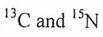 and ribosome group B was labeled with
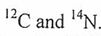 . Six hours after addition of both ribosome groups to an in vitro translation system, how many bands of 70S ribosomes are you expected to appear in a density gradient? (A) 1 (B) 2 (C) 3 (D) 4 (E) 5
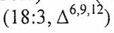 (E) Eicosapentaenoic acid
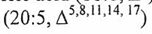
 as well as one ne unit of carboxyl and amino groups of arginine (C) one unit of
 , one carboxyl group of aspartate, and one unit of amino group of arginine (D) one unit of
 , one carboxyl group of arginine, and one unit of amino group of aspartate (E) one unit of
 , one unit of CO2 and one unit of amino group of aspartate.
 (B)
 (C)
 (D)
 (E)