所屬科目:研究所、轉學考(插大)-普通生物學
1. A cell lacking which of the following structures is most likely to be a prokaryote? (A) Nuclear membrane (B) Cell membrane (C) Cytoplasm (D) Nucleic acid
2. Which statement is true about the following molecule? (A) It is a cis isomer. (B) It is a trans isomer. (C) It is cis in its vapor form and trans in its fluid form. (D) It is not an isomer.
3. Which of the following terms does not describe a molecule of glucose? (A) an isomer of fructose (B) an aldose (C) a hexose (D) a disaccharide
4. While abundant quantities of proteins are produced by free ribosomes in the cytosol, new proteins are also produced by which of the following organelles? (A) lysosomes (B) the Golgi apparatus (C) the nucleolus (D) mitochondria
5. Which of the following types of molecules are most likely to lack hydrophilic domains? (A) transmembrane proteins (B) ion transport proteins (C) peripheral membrane proteins (D) cholesterol
6. Glycolysis results in the net production of which of the following sets of molecules per glucose molecule? (A) 2 NAD+, 2 pyruvate, and 2 ATP (B) 2 NADH, 2 pyruvate, and 2 ATP (C) 4 NADH, 2 pyruvate, and 4 ATP (D) 6 CO2, 2 pyruvate, and 2 ATP
7. In which of the following ways do plant hormones differ from hormones in animals? (A) Plant hormones may travel through the air as a gas. (B) Plant hormones function as only paracrine signals. (C) Plant hormones may be transported from the hormone producing cell to the responding cell through a vascular system. (D) Plant hormones typically travel from the hormone producing cell to an adjacent responding cell through gap junctions.
8. A mutation that disrupts cyclic electron flow in the light reactions of photosynthesis will specifically reduce the production of which of the following molecules? (A) CO2 (B) ATP (C) NADPH (D) ADP and NADP+
9. Which of the following events occurs during interphase of the cell cycle? (A) condensation of the chromosomes (B) separation of the spindle poles (C) spindle formation (D) replication of the DNA
10. Which of the following statements is true of a species that has a chromosome number of 2n = 16? (A) The species is diploid and has 32 chromosomes per cell. (B) The species has 16 sets of chromosomes per cell. (C) Each diploid cell has eight homologous pairs of chromosomes. (D) A gamete from this species has four chromosomes.
11. A recessive allele on the X chromosome is responsible for red-green color blindness in humans. A woman with normal vision whose father is color blind has children with a color-blind male. What is the probability that this couple's first son will be color blind? (A) 1/4 (B) 1/2 (C) 2/3 (D) 3/4
12. Assuming independent assortment at all loci, what is the probability that a cross between the following parents, AABbCc × AaBbCc, will produce an AaBbCc offspring? (A) 1/2 (B) 1/16 (C) 1/8 (D) 3/4
13. A sample of double-stranded DNA contains 28% thymine. Approximately what percent of the nucleotides in this sample will be guanine? (A) 8% (B) 16% (C) 22% (D) 72%
14. Use the figure to answer the question. Refer to the metabolic pathway illustrated. If I, II, III, and IV are all required for growth, a bacterial strain that does not make enzyme X would be able to grow on medium supplemented with which of the following nutrient(s)? (A) nutrient A only (B) nutrient B only (C) nutrients A and B only (D) nutrients B, C, and D only
15. For a repressible operon to be transcribed, which of the following conditions must occur? (A) RNA polymerase must bind to the promoter and a corepressor must be present. (B) RNA polymerase and active repressor must occupy the promoter. (C) RNA polymerase must bind to the promoter, and the repressor must be inactive. (D) RNA polymerase must bind the inducer, and the repressor must be inactive.
16. Which of the following characteristics of Taq polymerase make it useful in the PCR process? (A) It is heat stable and can withstand the heating step of PCR. (B) It is isolated from bacteria so there is a large supply. (C) It binds more readily than other polymerases to the primers. (D) It has regions that are complementary to the primers.
17. Which of the following techniques would be most appropriate to test the hypothesis that humans and chimps differ in the expression of a large set of shared genes? (A) RNA-seq (B) polymerase chain reaction (PCR) (C) DNA sequencing (D) protein-protein interaction assays
18. Some beetles and flies have antler-like structures on their heads, much like male deer. The existence of antlers in beetle, fly, and deer species with strong male-male competition is an example of which of the following? (A) convergent evolution (B) similarity due to shared ancestry (C) homology (D) parsimony
19. Viruses can carry out which of the following processes? (A) They can manufacture their own ATP, proteins, and nucleic acids. (B) They can use the host cell machinery to make copies of viral genomes and viral proteins. (C) They can use the host cell as a source of energy allowing viral machinery to replicate the virus. (D) They can replicate while within a host cell as well as when they are between host cells.
20. If individuals tend to mate within a subset of the population, there is ________. (A) no selection (B) no genetic drift (C) abundant gene flow (D) no random mating
21. Plasmogamy can directly result in which of the following types of cells? (A) cells with a single haploid nucleus or dikaryotic cells (B) heterokaryotic cells or dikaryotic cells (C) heterokaryotic cells or cells with two diploid nuclei (D) dikaryotic cells or cells with two diploid nuclei
22. Pheromones used in reproduction are not likely to be found in organisms that only reproduce ________. (A) in water (B) on land (C) using internal fertilization (D) asexually
23. If two species are close competitors, and one species is experimentally removed from the community, the remaining species would be expected to ________. (A) change its fundamental niche (B) decline in abundance (C) become the target of specialized parasites (D) expand its realized niche
24. Which hormone is released to stimulate the production of red blood cells? (A) growth hormone (B) erythropoietin (C) cortisol (D) acetylcholine
25. A population of plants experienced several years of severe drought. Most of the plants died due to lack of water, but a few individuals survived. The surviving plants probably produced higher levels of which of the following hormones? (A) auxin (B) gibberellin (C) cytokinin (D) abscisic acid
1. 原核生物與真核生物有何分別?
2. 何謂 three domains 的生物分類法?二名法如何書寫表達?
3. 概述所有生物的營養方式為何?動物、植物與微生物之區別為何?
4. 何謂 central dogma ? 說說其對生物學研究的衝擊?
5. 何謂 signal transduction ? 可說明其作用的機轉?
 阿摩線上測驗
登入
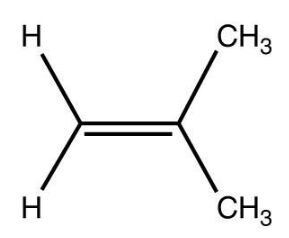 (A) It is a cis isomer. (B) It is a trans isomer. (C) It is cis in its vapor form and trans in its fluid form. (D) It is not an isomer.
