所屬科目:研究所、轉學考(插大)-微積分
1. = (1) .
(a) Find the Taylor series for centered at a = 0. (2) .
(b) Find the Taylor series for f(x) centered at a =2. (3)
(c)= (4)
(a) The linearization of y(x) at x =1 is (5) .
(b) y"(1)= (6)
4.= (7)
(a) The tangent plane to f(r, y, z) = 10 at (x, y, z) = (0, 1, 2) is (8)
(b)
and .Then Dag(0,1,2) = (9)
(c) Assume that f(x,y, z) attains the maximum value at (x, y, z) = (0,1,2) when restricted to a level surface h(x, y, z) = 1, where h(x,y, z) is differentiable and(0, 1,2) = 6. Using linear approximation, estimate the maximum value of f(x, y, z) subject to the nearby level surface h(x,y, 2) = 0.9. The estimated value is approximately (10)
(a) Find and by the Mean Value Theorem. Is f(x) differentiable at =2? Justify your answers.
(b) List all critical numbers of f(x) in the interval (0, 6). Where does f(x) attain a local maximum? Where does f(x) attain a local minimum?
(c) Find intervals on which y = f(x) is concave upward. Find intervals on which y = f(x) is concave downward. Find the inflection points of f(x).
(d) Sketch the graph of f(x) for x ∈ [0, 6].
(e) Suppose that , for > 6. -f(6).
(a) Parametrize the surface S and evaluate curlF .dS directly.
(b) Let C be the boundary curve of S. Decompose C as the union of differentiable parametric curves and evaluate F.dr directly. Show that the line integral equals JC the surface integral in part (a) which is consistent with Stokes' Theorem
 阿摩線上測驗
登入
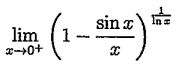 =
 centered at a = 0.
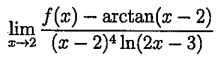 =
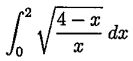 =

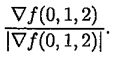 .Then Dag(0,1,2) =
 (0, 1,2) = 6. Using linear approximation, estimate the maximum value of f(x, y, z) subject to the nearby level surface h(x,y, 2) = 0.9. The estimated value is approximately
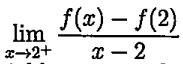 and
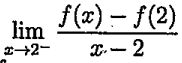 by the Mean Value Theorem. Is f(x) differentiable at =2? Justify your answers.
 , for > 6.
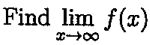 -f(6).
 curlF .dS directly.
 F.dr directly. Show that the line integral equals JC the surface integral in part (a) which is consistent with Stokes' Theorem